



Walking into Metal Chairs
by Karina
audio
Let me share an old Young Women’s activity that I went to when I was a Beehive.
The activity setup was about discernment: identifying the right voices and listening to the Holy Ghost. A maze of folding chairs was set up in the cultural hall, and the point was to navigate the maze from one side to the other. You would wait outside the door, a leader would put a blindfold on you, and then open the door for you and guide you gently to enter. Once inside, directions were shouted to you by the YW president (who I didn’t really click with) and a member of the Bishopric.
At the time, there had been a lot of lessons on priesthood, so I thought the answer was to follow the directions from the bishopric counselor. I thought this had to be an activity to reinforce those lessons. I started to follow the directions from the man, and I felt like I was going in the correct direction, but I kept walking into the folding chair obstacles and I thought it was my fault. It was never fully direct contact at the beginning, but more like when you cut a corner really quickly and get a sharp counter top edge right in your side.
Over and over again, I was clipping these folding chairs with my foot, my knee, and then finally I was fully stepping forward into these chairs over and over again. I realized I was at a dead end. So, my assumption was incorrect, and I had chosen the wrong voice to follow. This activity was not about listening to the priesthood or to the Holy Ghost or to God as male voices. I don’t think that it was thought about that deeply. I did begin listening to the directions from the YW president and was able to navigate the maze and back out to the hall.
Recently, I experienced internal moments of intense, hopeful personal growth, followed by frustration from external sources that felt like two hard-won steps forward, and then getting hit by a car and dragged 50 feet back. As I was trying to process these heavy feelings, this memory from the cultural hall suddenly popped into my mind. Stewing on it over the past couple of days, I realized a painful truth: I have again been walking into folding chairs for a very long time.
On a drive early this morning, on my own, I was ruminating on this past again and snapped! I shouted at myself in the car saying, “Enough! No More Reliving the Yuck! What would you re-craft this memory to be instead!?!”
So, here is what I would re-craft, recreate, and replace that Beehive experience to be for my thirteen-year-old self.
I can’t change how the leaders did the activity and I would probably still do everything the same up to the point where I realized that I was at a dead end. And then, I would stop, take a deep breath, and take off the blindfold. I would realize that I don’t need to strain to hear outside voices in order to get directions or instructions telling me what to do. I have all the information and context I need through my own senses, physical and metaphysical, to take the first step in front of me and then trust myself to continue to evaluate what to do next.
I HAVE ALL THE INFORMATION AND CONTEXT I NEED THROUGH MY OWN SENSES, PHYSICAL AND METAPHYSICAL TO TRUST MYSELF.
The maze hasn’t changed, and the room is still loud with competing opinions on how I should move through it. But the blindfold is off. I no longer need to bruise myself against obstacles just to prove I am listening. I am responsible for my own choices, and I am the one who needs to make them. The real dead end wasn’t the maze itself—it was the belief that someone else held the map to my life.


Breathe
by Carri
Naked, exposed,
no shelter but the cascade of scalding water.
But here I stand, In a shower of realization.
Truth, in glistening drops,
bounce and trickle all the way down.

Breathe

I am afraid,
afraid that you won’t love this version of me,
afraid you will only judge and judge and judge.
And when I’m afraid, I retreat.
And when I retreat, you feel unloved and abandoned.
And then you are afraid,
and you don’t have words to express that fear.
The flood of anger, blame, and judgment
swirl about my feet.

Breathe

We both recall how you took my hand,
led me from who I was to a new me,
the me who clothed my nakedness with Love and Spirit.
Yes, for a season, certainty held me,
Wrapped me up safely, and perhaps too tightly.
“Conform; don’t grow more than this.”

Breathe

But life and growth are inseparable,
and maybe pain, too.
Naked again,
perched atop this tattered cocoon,
and stretching cramped wings,
still trailing shame and fear,
I breathe in freedom, expansion, and hope.

Breathe

The woman, the girl, the child, the infant,
All I have ever been, all still there inside me—
Some so obedient, so compliant—
But this season, this me,
She is beautiful, and intricate, and new,
With unfamiliar colors and patterns.
If she surprises me, why would she not surprise you?
Where I find newness and growth,
Like nectar, like air,
Perhaps you feel only the loss of that earlier me.
The one you chose.
The one you know.

Breathe

It’s still me in here.
I’m still me, and I’m still here.
And I want you to see me.
I crave your love and acceptance,
but I feel from you only what I fear:
Disappointment, judgment, resignation.
Do you see?
Not standing in my way doesn’t feel the same as love,
Not the same as acceptance.

Breathe

I want to bridge this gap in hope,
No sting of disregard, of otherness,
From the very one with whom I should be one.
Growth is painful—
Sweet, bitter, beautiful, painful growth—
But here I stand,
On the eve of something,
On the morn of something.
Mourning something.
Wings untested,
Waiting.

Breathe


The Night Hike
by Kristine Napper
Before I can tell this story from Girls Camp 1997, I have to
acknowledge that every adult involved genuinely loved us and believed they were doing something good. With that caveat on the record, I take you back to a Wednesday evening in the woods…
Gathered in the camp’s amphitheater, we’d been singing silly songs and performing skits. With the sun about to set, the stake president took the stage. We assumed he was going to kick off the annual night hike. The year before, we’d pretended to be the children of Israel following Moses through the wilderness, with lots of costumed visitors and immersive activities along the way. We were excited to see what this year’s theme would be.
Instead, the stake president told us gravely, “I’m sorry, but we need to delay the night hike. We’ve received word there are unauthorized guests on the premises. Until we get the all-clear, nobody should be crossing the grounds. Just head back to your ward’s tents, and sit tight.”
(Spoiler: This was a lie; the night hike had already begun. It’s obvious now when I’m telling the story, but I was an innocent barely 13-year old in an innocent decade to be a child. At no point in this story will my young self suspect she’s in a simulation.)
We all went back to our campsites and gathered around the fire. It was getting dark, and we were getting nervous. We didn’t know what “unauthorized visitors” meant, but it didn’t take us long to start freaking each other out with what it could mean. I tried to keep my own voice calm, but only because the girl sitting next to me had grabbed an axe from the woodpile, and I was afraid she’d take a wild swing if startled.
I’m not sure how long we waited, but I know it was completely dark when we heard the junior staff running down the dirt paths. The ones from our ward stopped and shouted at us, “We’re evacuating the camp! You can bring one personal belonging, but we need to get out of here now!”
Pandemonium. Girls ran every which way, grabbing stuff and screaming at each other. A few of the most practical girls carried flashlights, while others snatched their journal or snack stash. The one girl clung tightly to her ax. My own fight-or-flight system was entirely focused on fleeing the danger, so I stayed empty handed. Nothing I’d brought to camp seemed even a little bit important. Somebody, presumably an adult leader, put out the fire.
We followed the junior staffers through the dark forest, quickly losing any sense of where we were. I use a power wheelchair, and I normally move slower in the outdoors because the bumpy terrain is rough on my body. That night, I didn’t care how bumpy it was. I was racing along as fast as the rest of the crowd.
Until a leader stopped me. I was told the others were taking a route that wasn’t wheelchair accessible, and I’d have to go a different way. I didn’t ask questions. My mind was only repeating let’s go, let’s go, let’s go. I followed whoever they told me to follow, and a small group went with me. I remember a ward leader, the stake president, and Axe Girl in that group.
Now separate from the main group, we heard gunshots in the distance. My heart was racing faster than it ever has before or since. Let’s go, let’s go, let’s go. We couldn’t move fast enough for me. New thoughts started crowding my brain, like Where is my dad?? He was a camp dad that year. Why hadn’t he come and found me? If he wasn’t with me, protecting me, was he ok? More gunshots. Crying, holding back screams, trying not to make noise.
We emerged from the path we’d been following through the woods into an open field. The gunshots sounded closer. It was pitch black except for the lantern we carried. “They’re going to see us!” I whisper-screamed. I thought I heard men’s voices shouting in the distance, something about getting those Mormon girls. We tore across the field, an easy target. Ax Girl and I sobbed hysterically. I kept repeating under my breath, “Heavenly Father, please keep us safe, please, please, keep us safe, Heavenly Father, please…”
We continued like this on another path through the woods, and the next thing I remember is arriving in a clearing where the rest of the girls were gathered. White lights were strung around the area, and an adult was addressing the group.
Jesus taught through stories, healings, lectures, discussions, example, and probably more, but never through manipulation. It takes faith to let our young loved ones walk their own spiritual journey and discover their own truths, and it is our job to offer guidance.
At this point, we were supposed to understand that the whole situation was staged and there was never any danger. I don’t know how long everyone else had been in this meeting spot calming down, but I was too deep in panic to connect the dots right away. It looked to me like a space that had been prepared for the real night hike, and now we were using it to gather, load the cars, and escape. Some of the other girls were still as distraught as I was. Others were acting calm. A few were giggling. It was so confusing. Why are we standing around? We need to go!
Slowly, my amygdala ceded control to the reasonable parts of my brain, and I was able to hear the camp director talking about our pioneer ancestors who’d been chased out of their homes by violent mobs. This was supposed to help us understand the Mormon pioneers. We had never been in real danger. The gunshots were firecrackers. The voices were the camp dads. My dad hadn’t rushed to save me because he was busy scaring me.
They sent us back to our ward campsites, which looked like a tornado had passed through. As we cleaned up and relit the fire, we were instructed to hold testimony meetings.
Tears kept flowing as we sat in a circle, taking our turn to talk about what a spiritual moment we were having. We needed to explain the feelings that overwhelmed us, and we needed this to be the positive experience Girls Camp was supposed to be, so we scrambled for the words to make it so.
It’s been almost 30 years now, and writing this story still makes me shaky and tense. A family member who doesn’t know what I’m writing just passed by and asked if I’m ok; apparently I don’t look it. Every time there’s a mass shooting in the news, I flash back to being shot at while carrying the only light source across an open field. I’ve never actually been shot at, so I don’t feel like I’m allowed to claim an experience that’s real for other people. But at the same time, my nervous system believes it was real. There was no blood, no injuries, no loss of life. Everything was fine. But it didn’t feel fine. It still doesn’t.
To his credit, the stake president apologized for the part he played in the deception. He belatedly realized that he had given the Young Women reason to lose trust in our leaders, and he wished he hadn’t done it. A few parents in the stake were vocally upset about the whole ordeal, but only a few. Mostly I heard sympathy expressed to “the poor camp director” who cried when she got negative feedback.
At the time, I said everything I was expected to say about how much I learned and was touched by the Spirit. But I quietly felt conflicted. As an adult, at least I can say that I’m no longer conflicted. The whole activity was a terrible idea. It was well-intended by faithful and loving leaders, but somebody should have realized early in the planning process that it was a terrible idea.
At the most basic level, I can’t believe nobody considered the “what ifs.” Convince hundreds of teenage girls that they’re in mortal danger and send them running through dark woods. Some grab weapons. Some panic. It’s a miracle no one was seriously hurt.
We didn’t just learn about trauma that night; we experienced it. Trauma rewires the brain and continues to live in the body, especially if there’s no support afterward to help with healing. Nobody encouraged us to process our trauma. Just the opposite, we were immediately led through denying anything traumatic had taken place. We were expected to express gratitude and speak positively about the whole experience.
Everybody responds to experiences differently, and I’m sure plenty of girls left the night without any lasting scars. But I can’t be the only one who permanently lost some degree of my sense of safety. I now lived in a world where life could turn upside down or even end in an instant; a world where the adults who’d always represented protection and truth might lie to me. I recognize these are lessons everyone has to learn eventually, and it’s a privilege to avoid it in early childhood. But I believe in letting the cruel world teach its cruel lessons in its own time. It’s our job as loving adults to be sources of kindness and safety in kids’ lives, not the intentional source of pain. In other words, trauma will touch us all in some shape or form, but we should never manufacture trauma to teach a lesson.
I’m afraid this night at Girls Camp embodied one of the most toxic patterns of our religious culture—spiritual manipulation. The whole event stirred up overwhelming emotions and lots of crying. We’d been trained our whole lives to associate big feelings and tears with spiritual experiences. The lesson was heavily reinforced that night. We felt outsized emotions that most of us had never felt before, and were told it was the Spirit. We cried, and were brought into a testimony circle. How were we supposed to learn to listen to our bodies’ danger signals, when they’d been identified as spiritual? How were we supposed to trust our spiritual intuition, when emotions and spirit were indistinguishable?
If this piece makes it to any of the people who helped lead my Girls Camp in 1997, I hope they know I have nothing but love for them. I also hope that with time, we’ve all gained more wisdom. As we teach the next generations of children and youth, let’s keep referring back to Jesus Christ, the Master Teacher. He never needed tricks, manipulation, or gotchas to teach powerful lessons that resonate through the centuries. He calmed the storm to ease His disciples’ fears, but He didn’t create the storm. He was asleep when it started; it was a natural phenomenon. Jesus taught through stories, healings, lectures, discussions, example, and probably more, but never through manipulation. It takes faith to let our young loved ones walk their own spiritual journey and discover their own truths, and it is our job to offer guidance. Teaching without overstepping is a tricky balance, but Christ has set the example for us to follow.

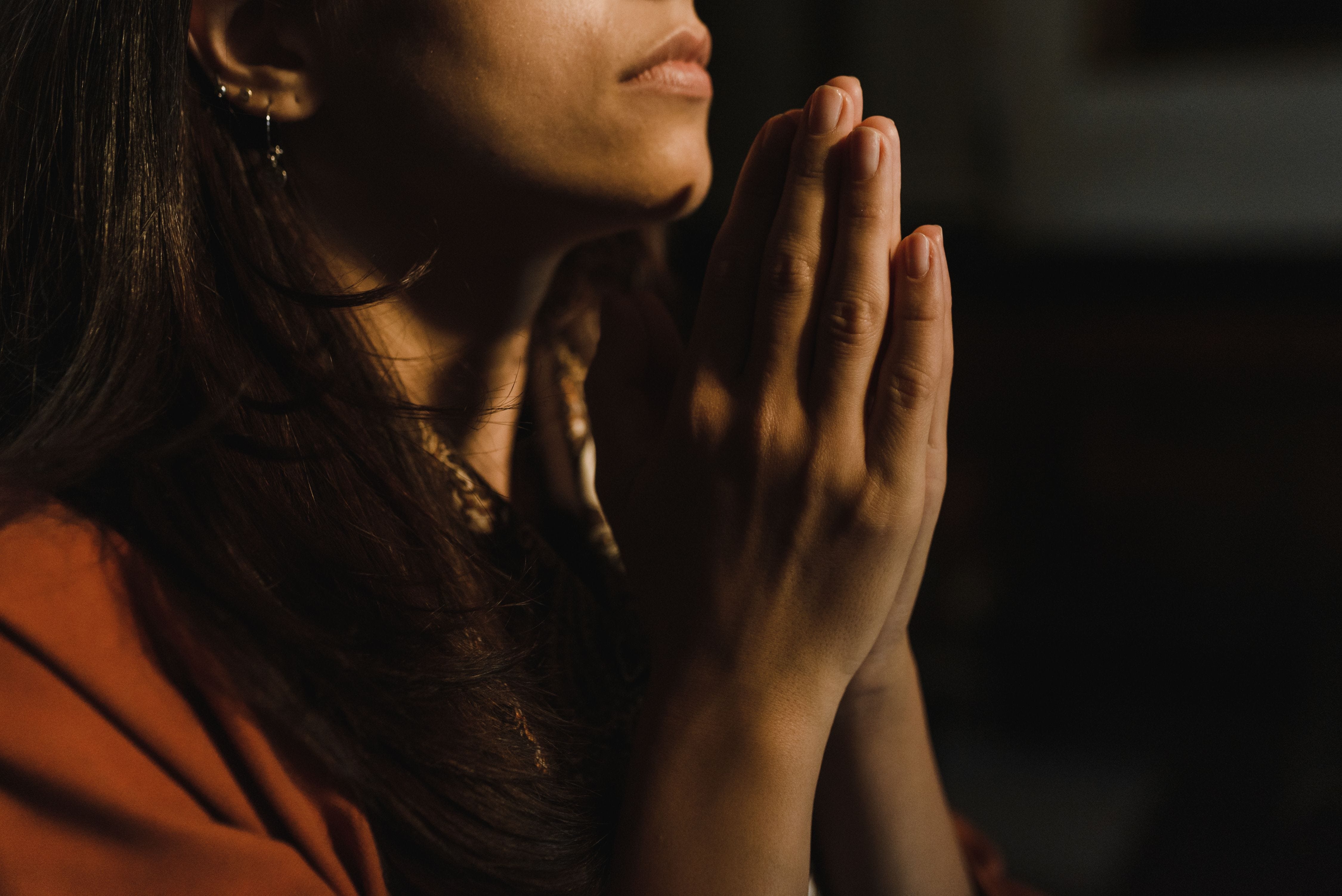
The Prayer After the Prayer
by A.L. Call
Only after I kneeled
And said the opening dear,
Remembered to start with thanks
Before asking for needs
Never forgetting to dot my thys
And cross my thees
And close in His name
Amen

Could I crawl into the lap of my bed
And wrap my blanket tight in a hug
And feel the weight of the day
Be soothed by the tears on my pillow
It was really hard, I’d cry.
Where did I go wrong?
How am I going to do this?
Is this all there is?
Is it enough?
Am I enough?

Then an inner peace
Would caress my wounds
And heal my sorrows
My burdens lifted and set aside
And love would cradle me to sleep
Singing me the lullaby
Of the worth of my soul

The first was a formal letter.
A once drafted letter
Which I copied and pasted
And copied and pasted.
Someone else’s prayer.

The second is a visit with a friend
Where I don’t have to hide
But can share, listen, confide.
When I tossed out the one
The other was still there.

From a listener:
Hi,
I was listening to your book yesterday. I’m not at the end yet, but the chapter I was on talked about talking out loud at church about things not working for you. I tried that about 2 years ago and it didn’t go well. It was the first Sunday of the month. We had all received an email from a young man serving a mission in which a man in Oklahoma who was a native American wanted to join the church. First he smoked. He switched to vaping, but they had to tell him that that too was forbidden. Secondly, in their tradition, they smoke a peace pipe and they take one inhale and pass it around. He would have to give up that ceremony to be initiated into the church. My heart broke for him. I got up and shared that. I was crying. No one should be turned away who wants to join. Jesus wouldn’t turn someone away and say, “Go fix yourself and when you’re nice and clean, come back.” In addition, on that very week we were reading Galatians which says that no man is righteous enough to save himself. We are saved by grace and our good works are insufficient. (Paraphrasing!) I suggested that we should lower the standards for baptism but for those wishing to go to the temple and who’ve been around for a while, then impose these standards. How is it reasonable for someone to fix themselves without the support of the church? And when you get baptized, the Holy Ghost is your constant companion. So before you have the help of the Holy Ghost you need to fix yourself first. If we could fix ourselves, then what would we need with the church and God? (I joined the church 11 years ago, so it wasn’t that long ago that I went through having to reorganize my life into a tiny box to be acceptable to the church to get baptized.) In addition, I pointed out that the word “Unworthy” in the dictionary means “worthless; of no value.” We ought to use a different word, like not qualified, etc. It is brutal to say that to someone who is being turned away and told that their sins are too awful for them to associate with us or be in the temple. I know, because it happened to me. But when a person is in a situation to not pass the inspection, sometimes they are in a fragile place. I was. I was a single mother with 3 kids with no family and no friend. We were having a financial hardship. Then I found the church and was so happy. Then I was denied a temple recommend and found to be “unworthy.” I was excluded from events. It was humiliating. I was already fragile. I cried and wailed for months. My daughters and some other people saw the pain I was in and never wanted to have a part of the church. Doing this to me did nothing to make the church attractive to other investigators.
The result of sharing this? A lady came up on stage and interrupted me and reminded me that the purpose of this time is to share my testimony of Jesus Christ. So I concluded with, my testimony of Jesus is that he would never turn away one of his lambs who wanted to come to him and say, “Go fix yourself first and then come back.” As I spoke I saw a stone-faced crowd. No one had anything to say to me afterwards. I cried the rest of the hour as I was so distraught over the man being rejected. The bishop recommended I speak with the missionary when he returned. Other members told me that “unworthy” doesn’t mean “worthless” even though that is what the dictionary means. They didn’t know what it did mean. When I was found unworthy I was told I couldn’t go to the temple cause my presence would cause the Holy Spirit to leave the temple and my presence there would ruin the experience for everyone in the building at that time. Wow, I’m pretty powerful. We have a suicide epidemic that even the US government recognizes. They call it “suicide alley,” the corridor west of the Rockies—Idaho, Utah and Arizona. Their suicide rate is 2 1/2 times higher than the rest of the country. I would propose it is this use of the word “unworthy.” The Bible says, “worthy is the lamb” in Revelation. It is the only place where worthy is used, as best as I know. Men were righteous, but not worthy, in the days of old. They could call us “unrighteous.” Or even straight up sinners. But being told you are worthless and of no value is hurtful beyond measure, when your family members will not get saved and be in the same heaven as you. Or the reverse, they will get saved and you won’t get to the right heaven. Your golden ticket into heaven is what will make it possible to be united with your family and the bishop, one man’s opinion, keeps you in eternal outer darkness or some lower heaven. There is no appellate court. If you disagree, only his opinion counts. I told him I am worthy, but he disagreed and informed me that I had unholy thoughts. The Bible says, no man knows the thoughts of another man. But this man did! My daughter’s name is Daniella. The meaning of Daniel is “God is my Judge.” Well, the bishop is my judge. And isn’t Satan’s sin wanting to be like God, or have his power? So, isn’t the bishop doing the same thing as Satan? How could someone detest me so much as to wish me into outer darkness or a lower heaven and never to be reunited with my family? When I show up, tithe, help others. Yet he condemns me to who knows where but somewhere bad. How could anyone have such hate in their heart to do that to another?
Here’s another question that hasn’t been answered adequately. Genesis 1-3 We made man in OUR own image. Male and Female WE created them. From there we know that God was male and female and they together created Adam and Eve. So how is it that in the temple ceremony, the mother isn’t there participating in the creation of man? How is it Father and Son are doing it all together and the Mother isn’t even there at all. The ceremony goes against Genesis. Am I the only one who sees this?
One of the core issues that bothers me is that no one has an opinion about anything. They see nothing wrong with the word “unworthy.” They think it’s great that this man won’t get baptized. I guess they’ve never been on the receiving end of the rejection. I had a concern about why women couldn’t be witnesses in the temple. Oh, no no no, women can’t be. We don’t have the priesthood. No, no no. They like it that way. Then suddenly women can be witnesses and isn’t that great! Well, pick one. It’s great or it’s wrong. I see many things change. Prior to the change I said to the lady missionaries, wouldn’t you like to wear pants during the week? Oh, no. It is such a privilege to make this small sacrifice for the Savior and the building up of the kingdom for Christ. Then they make the change and they wear pants. What happened to building up the kingdom. Remember, it could only be accomplished in a dress? You loved wearing a dress? And now they are so happy for the change when a short time ago they defended the practice and loved it. Why can’t anyone have an opinion. Something as small as changing a light bulb. I said, wouldn’t it be great to get recessed lights instead of fluorescent? No takers. But if we got them, they would then think it was great. How can I be around people with no thoughts in their brain? It makes me crazy. I beg them to name one thing they don’t like, but are willing to go along with cause those are the rules. They can’t think of one. I’m like, how about new light bulbs? How about women being able to give a blessing for healing? They are just silent. Have they never thought about it? How do they have college degrees but no ability to have rational thinking? And I wind up castigated ever so gently. We are to show support and not be contentious. We must obey when we don’t understand. But what happened to democracy? And everyone’s opinion mattering? And trying to make a place better for having been there?
So I’ve been beaten down to showing up, like you, but keeping my mouth shut. No one wants to hear my opinion. My daughter too is gay. I think most families have a gay in there somewhere. And if not gay, some other thing that is unacceptable to the church. But they deny it. They don’t know a single gay person. Well shame on you. You have to be so holy to be acceptable in the temple that you can’t associate with the homeless, the prisoners and the gays. Only from a sanitary manner. Ok, it’s not always like that, but sometimes. One day on a Sunday morning after the coldest rainiest night, a lady read a fictional story about a little girl who froze to death. Everyone was in tears. I said, isn’t it interesting that this was read today. Last night surely many people in Los Angeles froze to death. When people are wet and the temps are below 40°, some people freeze to death. Their response? “That’s not true.” I don’t know how to help people who just want to live in a fantasy world of rose colored glasses. It is scientific. Street people die. I personally know of 3. And the quick and simple answer, instead of feeling the pain of someone dying is, “That’s not true.” I said, well, what do you think they do? “They go inside somewhere.” Did you provide shelter to anyone last night? “No.” Then where do you think they go? “The government has somewhere.” All 70,000 were housed? Impossible. Why do they fight me? They could just say, “That’s a tragedy.”
So I enjoy the friendship and activities. I believe in some of it. I like most of the lessons. But I have learned to keep my mouth shut or I will be publicly rebuked. Sometimes someone has quietly shared a hurtful story, but mostly I have learned to keep my mouth shut or I will not be welcome. So, when you encourage us to share, I have learned that this is not a safe place in which to do that. I really hate that part of the church. And, in fact, my attendance has been sloppy this year and I stopped tithing. The magic is gone. I no longer aim for a temple recommend.
—Cathy Williams

Hi,
I just was listening to your Episode 235 and there are several things that stuck out to me.
I am a mom of a young woman. She’s 14. Every path that she’s been told will lead to success is probably not there. Nursing, education, computer science, science at all—these are paths that are traditionally held out. Doctors. Lawyers. But the costs of education are so high. She’s an athlete. She’s trusting in her athletics to cover her schooling so that she can get a degree in the first place.
She’s getting the same messages her aunts got. I was never a YW. I’m a convert. And I always grew up with the idea that I will work and have a career. Being a mother was never ever on my radar. And being a mother isn’t on her radar. She pushed back in seminary when they said the equivalent of priesthood for women is motherhood. She asked what happens if she can’t physically have kids? Or if she can’t afford them. What happens if things don’t work out. Is she less? And why is her spirituality tied to something about her body? Isn’t she worth more than that. And I guess she inspired a revolt because I got the joy of meeting with the seminary teachers.
I’m shocked at how resilient these girls are. And how willing they are to take their friendships from seminary and all into the real world and rely on those. They have hope. They have amazing ideas. And they do not let adults squash on them at all. But the messages they’re getting are still the same ones her aunts got. It is just not the same world, but it is the same messages.
At some point the church is going to have to adapt or they will lose all the young women. She knows several gay young women who are in seminary because they believe, but who have plans to leave the church because the church can’t accept them. She’s decided that she won’t continue when she’s on her own either because the church lacks the flexibility or general desire to change with and support the youth as they are experiencing the world, and relies on the “older” times instead of leaning into what they are going through now.
Just wanted to throw all that into your discussions. Again, I love your podcast. But the church is going to lose them all.
—Natasha Wunderlich

I just finished listening to episode 170 and 171, and one part stood out to me. Susan and Cynthia and C.A. Larson were talking about how in the Bible it says that our sins will be shouted from the rooftops and how terrifying that was to learn and think about as children and youth in the church.
I’m currently reading books about the Bible and am taking a break from attending church meetings—though I still consider myself to be a faithful member of The Church of Jesus Christ of Latter-day Saints. I discovered, to my horror, that only 8 of the 27 books in the New Testament can be traced back to their authors. And that the apostles never ever claimed to have written a Bible, or even wrote records for that matter. Almost every biblical scholar through the years has agreed that the Bible is a compilation of copies written decades AFTER Jesus had already been crucified. Luke was not written by the apostle Luke. Matthew was not written by Matthew. The apostles were illiterate and simple fisherman, how could they have kept records? They didn’t. Rich gentiles from the other side of the country heard accounts of Jesus, years after his passing, and wrote them down. It is horrifying to me that I never knew this. And while I know the Bible is flawed and has always contradicted itself at times, why was I never taught this?? All of these biblical teachings that were held against me and made me feel little, small, and worthless…and only one apostle can be traced to being a TINY part of it. Here I was thinking I was receiving everything I should know on how to repent and live my life along with the Book of Mormon.
I remember that verse about sins being shouted from the rooftops terrifying me as well, and I’m 26! Times are not changing quickly and neither are the lessons the church is choosing to emphasize. I can only hope that my daughter does not have to listen to these same teachings based on copies of copies of copies of rich men and who knows how many different accounts and eyewitnesses they used to write the Bible. Or I don’t know what I will do about my attendance in the church. I don’t want her to be afraid of my heavenly parents like I was and am.
—Olivia Muller
Sources : Jesus, Interrupted by Bart D. Ehrman.

Contributors:
Karina
Carri
I’m a communications professional who is still working to claim my voice in my own life. I both joined the LDS church and became a wife at 18. After 30 years all in, I’ve been navigating the journey toward differentiation and the 2nd half of life for about the past 10 years. I’m a mother to three amazing humans, and I find my joy in family, words, ideas, mountains, stars, and green things growing.

Kristine Napper
I am a lifelong reader, writer, wheelchair user, and taco aficionado. Born and raised in Washington, now living in Oregon, I have a a very Northwest soul. I teach 7th grade social studies. I also spoke at TEDxPortland and wrote, “A Kids Book About Disability.”
A.L. Call
Thanks for supporting Say More and ALSSI. Have something to say? Join the conversation: Send us a voicemail, start a chat thread, or write a piece for a future issue!