



We here at ALSSI are thoroughly enjoying our new game, “What Do You Say?” In light of the podcast episode released this week, we thought we would share some of the responses to our, “What do You Say?” questions we’ve posted online. Thank you to everyone who shared their ideas and experiences in this community. Every time one of us speaks or writes, another feels less alone. We've learned our stories can be very real lifelines, even when we don't see those who grab hold and hang on.

Something I see differently today than I did 10 years ago is the idea that a savior needed to die…and the whole concept of the atonement.
Ever since I became a parent, my perspective has gradually shifted. The idea of “I sent my son to die for you” feels very different to me now. It doesn’t align with what I would expect from a loving, all-knowing, supreme being.
As an imperfect human, I would never require one of my children to die for anyone else. And if I had created all of this, I wouldn’t make the people I love inherently unworthy in the first place.
Feels so strange to me now.
—Jamee Andelin
I have shifted the way I view trials. I no longer believe that “everything happens for a reason” and God had some master plan that involves giving me my trials. I currently view the hard times as just part of the condition of being mortal. Sometimes good can come from them. They’re not pointless. But God didn’t handpick them to prove me.
—Jessica Mitchell
How about in the last 6 months? I think about God differently. Instead of a God who is a gatekeeper, demanding, and to be feared and obeyed or else, I know believe He is ALL loving and no matter my choices or how I get things wrong I will always be loved and welcomed to live with Him and my loved ones.
—Kathy C.
That putting my family over policy is extremely important. To Think that I was trying to keep a family eternal with rules that strained relationships is now laughable. People come first now, and if that send me to hell, so be it.
—Jillian Tueller
Personal revelation over obedience to church leadership. Wow what a difference! I am using the gift of agency instead of blindly following man’s interpretation of God’s laws and it feels so good.
—Dee Adams
A couple of my favorites are that I am God and God is in me. There was never, and could never be, a separation. And, closely related, that we and all of God’s creations are connected. When one is harmed, we are all harmed. Conversely, when one is healed, we are all healed.
—Marley Orton
My connection to God has no gatekeepers.
—Leslie Boyce
I don’t believe in God anymore. But I am happy to see women reclaiming their power and autonomy when it comes to their religion.
—Erin Pfleger
I have claimed my spiritual authority, I don’t need a man of anybody else’s authority to have a relationship with God. I also believe in a God who is not legalistic, but is love.
—Gaynor-Marie Glass
Many things, but mostly how we have been saved by grace, and that we will all return to our Father in Heaven. I think our temple visits place us on perhaps a higher plane of righteousness when making promises to the Lord and showing our respect and submissiveness in following the gospel and doing His will, but I don’t know in my heart that some things performed in the temple will need to be done when we pass by the sentinels in Heaven.
—Holly Christensen
Mainly, my vision of eternity has transformed. I believe God is more than a body of flesh and blood. God is more that 3 degrees of glory and God is more than gender. My beliefs are so radically different they seem unrecognizable to some, but I think they fit seamlessly into what my heart and head have always felt. We are still an eternal family, each of us still aspires to become like God once was. Love is forever the foundation and being like Jesus means focusing on that love and helping people to grow. What’s really changed is I have lost fear. I follow myself and my inner soul. I can’t believe the relief I feel and I think my “fruits” speak for themselves. Less judgment and service that is heartfelt, not forced. I’m happier and more self confident. Losing myself really has led to finding myself. I found this podcast at the beginning of my journey and I feel like I have walked this path with many of your listeners. Thank you for allowing what I believe to be the echoes of eternity brought forth into light.
—Pamela Kennedy


My own personhood and autonomy. I’m embarrassed to admit this, but here goes: I was relieved when my husband chose me when I was 20 because it took the pressure off me having to make risky choices like trying to get into law school. This was the mid-80s, and my Mormon bubble didn’t have many examples of career women. Being someone’s wife was safe, known, preached from the pulpit. So I made the sacrifice, squelching any desire to develop myself and following the known quantity of temple marriage, stay-at-home motherhood, all with relief that “at least someone chose you!” I willingly, albeit blindly, chose not to develop a ME.
—Becca T.
I have 2: paying tithing on gross, off the top, for 30 years when I should have been putting that money in retirement. And also starting having babies at 20 and not finishing my education because I hadn’t self-actualized. I had so many interests but didn’t know what I wanted to be when I grew up. So I tripped into SAHMhood.
—Brooke
Wearing garments for over 35 years. Being out of touch with my body. Disliking my body. Living with the fear that if I didn’t have them on, something bad would surely happen to me.
—Nancy
I sacrificed my dreams. LDS culture said “if you are a woman, your dream is motherhood, and that’s it.”
And I love being a mom, but I didn’t realize until much later that I hadn’t even allowed myself to have any other dreams.
Another one I regret less is that in high school I gave up a trip to Europe for Girls Camp. I had signed up to travel to Europe for two weeks with a group of high school musicians from all over the state. Since I had turned 12, Girls Camp had ALWAYS been the second week of July. I was scheduled to return from Europe at the end of the first week of July. We had already put down over $1000 towards the trip when the dates for Girls Camp that year were announced. It would be the first week of July. I was devastated. I loved camp and this was going to be my last year. After a few weeks of agonizing I decided to pull out of the Europe trip. We lost the $1000. Most expensive year of Camp ever. I’ve still never been to Europe.
—Zinah B.
Putting LITERALLY everyone else’s needs ahead of my own. Trying so hard to be that selfless woman that’s spouted about in church.
Thinking that the natural woman is an enemy to Godde. ( yes I changed it on purpose ).
Those beliefs led me down so many roads that led to intense personal decisions that impact me to this day.
—Genna
I can completely relate to the sacrifice of my true self, getting an education, having my own career, and the tithing.
Which brings me to the answer that came to my mind when I read the question. The biggest sacrifice I’ve made in my life was going to work (two jobs!) at age 45 when my youngest was six-years-old so we could avoid bankruptcy (mostly medical bills) because it was WRONG to go bankrupt if we could avoid it, and of course paying such a generous tithe guaranteed God would give me strength to work 50-60 hours a week (half of those just to pay the generous tithe). At a low-wage jobs because I had no education. But can I call it MY sacrifice if it was my children who suffered the most? Yes, it was rough on my brain and body for those eleven years and yes, it battered my marriage beyond repair, but my kids are the ones who paid the price of having an absent or cranky/exhausted mother. I can’t begin to express my anger and grief. How can we claim the family to be the most important unit when our teachings so often cause harm to families?
—Katy O’Barr Smith
Giving up on becoming a medical doctor because I thought having a family took priority. I did have the satisfaction of working in the medical field for 25 years after the youngest was in school, where I was able to make a difference for good. But I often wonder if there were greater opportunities to make a difference had I chosen differently. I don’t regret having 8 children. Not at all. They are wonderful people and each of them and theirs are making a difference for good in the world.
—Pat Catherall
I alienated my entire family because they were not members of the church and could not enter the temple for my wedding to my husband.
That was emotionally and spiritually devastating - but demanded [by a] religion that prizes obedience and worthiness above all else.
Putting the church’s demands over what my own conscience told me was wrong will be part of my deconstruction for the rest of my life. The harm from that one event has echoed through our relationships for years - and still does in the distance it caused in the lives of my children relative to their grandparents.
—Jessica Mertz
A mission, while the mission itself was a great experience, I felt very alone when I returned. As a person on a visa, I had to enroll in school full time a month after. I had no family close, very little money, ate little, it was winter and it was one of the hardest times in my life. I was very poor.
—Carolina Bell
One thing is serving a mission to Idaho. It was probably at least twenty years or a little more before I admit, it’s anyone publicly that I have been disappointed in that mission call. Even now, I did learn to love the people of Idaho, and I had tears when I left, i had wanted to go to either a Spanish- speaking mission or a welfare mission. I feel it is something that I do or rather did to show love for Jesus Christ and Heavenly Father.
Another one is perhaps not really a sacrifice, by just being single and not having children. I’m at a point in life for reviewing my life, and knowing those dreams and hopes will never ever happen. It is a devastating kind of feeling. And there’s a part of me that wonders what my life would have been like, perhaps without the influence of the church on dating and what type of people to look for.. For instance, I’m sure church culture and church teachings probably influence some guys to not like me.
Another one is unfortunately due to my job. I have a job that basically requires homework in terms of paperwork and such. So I have sacrificed personally due to the kind of job that can impact one’s life balance. I feel like i’ve given a lot to my job. Trying to help patients yet in hindsight, even though I did what needed to be done, I wish I had been better with boundaries than life balance in some aspects of my work.
—Nita
My personal autonomy. It was 2003 when I got married at age 20. I knew plenty of women that had an education/career, but no one, not even my parents, ever actually talked to me about having hobbies or interests, going to college, or any sort of personal development (except Personal Progress, of course. My mom once told me Satan had his hands on me because I didn’t want to do it.) So I never had any plans for life except get married. So now I’m an empty-nester at 43 and trying to figure out who I want to be and what I want to do.
—Kayla
No one “chose me” until it was too late for the motherhood part so I was left with education choices that put me near poverty because they were good degrees for a mom.
—Heather G.


Men’s opinions on women’s issues.
—Haley Mann
ANYTHING a man says. I’m serious. I was taught that anything and everything a man said was literally smarter and wiser than any woman, especially myself. No more. Done with that. That is not true in the slightest.
—Mary Cox
Every damn thing! Swearing, what I wear, what anyone says I’m supposed to believe or do, counsel from ward, stake, and SLC leaders, the Word of Wisdom, the importance of meetings, shopping on Sunday, the temple, the afterlife, and, again, SWEARING!
—Carol Colvin
My children’s salvation looking like church activity and a “covenant path” lifestyle. Now that I don’t take that seriously, I’m so happy, relaxed and can and enjoy my adult kids 100%!
Boy, do I ever love them.
—Nancy
The afterlife. I now choose to focus on finding joy in this life.
—Jodi Gale
As I recover and heal from scrupulosity, I've taken a break from attending my rather prescriptive LDS Ward. In so doing, I felt like Alice in Wonderland for a while last year. I didn't know which way was up, what was real or false, or right or wrong. Instead of enjoying the adventurous ride, I stressed and cried almost every day for months as my spiritual foundation crumbled.
After a few months, finding a bit of stability and soft landing in a local, progressive Methodist community, I found myself crying and stressing less. I still relapsed at times with tsunamis of guilt or shame. During one of these relapses, I distinctly heard in a loving, almost joking tone, "You've got to stop taking Me so seriously!"
I've been enjoying this spiritual adventure so much more since that moment.
So, long story short: GOD.
I’ve learned to take God less seriously, in all the good, wholesome, healing, playful ways that God wants for our relationship.
—Andrea Neahusan
The opinion of anyone regarding my “worthiness”.
—Laura Balmaceda
What we are “supposed to” do and feel and be.
—Joy Wil
Everything that is not about secure attachment. If it doesn’t affect secure attachment relationships, it’s not serious.
—Paula White


That 15 old white men were the mouthpieces for God and that their words were what should guide all my actions.
—Meadow Petersen
Sadly, the belief that I could bring about any kind of change in my ward.
—Rebecca Bigelow
A transactional God. I actually think that God CANT intervene in our lives. They are God in that they love and care for us and the ultimate form of worship is to have a relationship with them. That thought makes them seem more loving to me. Otherwise, it means that they pick and choose when and who and how to help...or not help. And that just doesn’t make sense to me.
—Tara Northcutt
That there were good reasons for all the things the church encourged or discouraged. Now I know that many of those reasons are just inherited cultural baggage.
—Laura Glasglow
I think patriarchy/hierarchy has been a hard but freeing belief to let go of. I still believe that some version of the gospel according to the LDS church is true. There are a lot of things where I’m like “yeah, maybe something kind of like that is true, but probably not in the way we’ve learned it.” But the whole idea of patriarchy, even though it’s so central to the way the church is run and supposedly continues into the eternities.... No. I can’t keep trying to believe that an oppressive system comes from God.
—Kristine Napper
I have let go of so many things but the biggest is that my religion (Jehovah’s Witness) is THE TRUTH.
—Melinda Kopilow
I’ve let go of believing the church has all the answers. And that what the church did was “God’s Will” and there must be a reason for the things that didn’t seem quite “right.” Like denying priesthood to groups of people. Or polygamy.
—Maria Krieser
The belief the Church has all the answers. They don’t and wanting them to was hurting me.
—M. Alva


Learning to let go of the Mormon “I have the answers to everything and I am right and you are wrong and ‘playing church’” (cough, cough Brad Wilcox) has been SO FREEING!! For a long time after deconstruction, I felt like my beliefs might be wrong or right, but it didn’t matter because I was learning, thinking, and growing! Now I realize I was close, but just barely missing the point = there IS NO RIGHT/WRONG in spiritual growth and learning!
—Sage
As an enneagram 8 - being wrong is one of my LEAST favorite things -- BUT - allowing the vulnerability of being wrong is also the gift of a healthy enneagram 8 (I’m not quite there yet, don’t fret) -- it’s where I learn about myself -- and that’s when the growth happens. I also think that the more I’m wrong about some of the little things, I trust myself to be RIGHT about the bigger things.
—Mary
I’m never comfortable with being wrong. But I’m also learning to lean into the discomfort for “productive discomfort”.
That said, there’s still plenty of times I don’t wanna lean in, but instead get unproductive discomfort and just be sassy or lean away/walk away from it to not be so uncomfortable.
—Nikki Nelson
I didn’t even know feeling comfort was a thing. Been feeling uncomfortable since birth. Adventures ahead.
—Evelyn Galbraith
I’m not comfortable with being wrong (mostly because I am a recovering perfectionist, considered the smart one in my family and was usually right) but I’m much more comfortable with not knowing all the answers. I’m okay with saying “I don’t know, but I’m sure everything will be fine.”
—Carol


What was a woman’s role at church and in heaven, other than supporting other people’s dreams and lives? Luckily I had faith that once I went to the temple, god’s true plan for women would be revealed. And…we all know how that turned out.
—Jodi Gale
I was taught “No necking and petting,” and no one could/would answer what that meant! I’m still not sure.
I think most of what I learned was ambiguously taught, hence still so much is ambiguous to me.
And - all those handshakes to determine evil spirits and resurrected spirits, etc. How on earth was I supposed to remember all of this? Still confounds me; I see no relevance.
—Ronda Weaver
How will we get to heaven? Like will it be on a rocket ship to Kolob? Or will we dematerializing into energy and transported like on Star Trek. I spent way too much time thinking about this. Not one Sunday school teacher had a satisfactory answer.
—Ginger Hanson
If EVERYONE gets a body, when does the Holy Ghost get a body? I assume he would be the last spirit to be born, so there is an end. Also, after he gets his body, does that mean we no longer have “The Gift of the Holy Ghost” here on Earth? How does that work? I did ask the question once. The poor Bishop had no idea how to answer. Or that it was even a possible question to have. I got some version of “God will work it out in the end” The greatest non-answer answer the church has.
—Christina Beal
Are women only there to raise boys who will go and do cool things and girls to raise more boys and so on down the line ...
—Amanda Funai
I remember the day I learned about Polygamy. 14 years old in Seminary, Church History year. I asked my mom about it after school that day and she confirmed what I’d heard. I sobbed in my room in utter disbelief and despair. The first jar on my shelf. I tucked it away because it physically hurt to think about. Honestly, it still does.
—Farrah Nordquist
The 3 degrees of glory: where is the “cutoff” line?
If God know what decisions we will make, why bother with a thousand years of peace and judgement day, etc.
Why cant I play with non-morons? When I moved to Utah this was the first thing they TRIED to instill in me. Segregation of Mormons from non.
—Ricci Giles
Two big questions for me in my teens:
1. Why would God disallow black men from receiving the priesthood (6th grade when that started)
2. Why was Emma not worshipped for all she did!! Members didn’t even want to talk about her when I was a youth.
—Janene Goubert
My mother joined the LDS church when I was 5, my father was already a member. She was raised as a devout Catholic, parochial school too. My maternal grandparents were my favorite people! They were kind, loving, loved Christ, served in their church and so much nicer than my paternal, LDS, grandparents. I am old enough to remember when the “Great and Abominable Church” was directly identified as the Catholic Church. That didn’t sir well with me. I always wondered if they got that wrong, what else did they get wrong??
—Theresa Nowling
When I got a little older I read the scriptures a lot. I was focused on the idea of univocality in the scriptures and thought that if I could just study hard enough I would be able to find the true answers to all my questions.
—Mara Haslam
I obviously didn’t get the repentance message prior to baptism and soon after got into a physical fight with a friend at school and thought I would go to hell. That worried me for a long time.
—Diana Kell

Say More: At Last She Writes It is thrilled to continue a series called, “Faith in Focus: ADHD and the Mormon Mind,” by Brittney Walker.
This series explores how ADHD shapes the faith experience for women raised in the Church of Jesus Christ of Latter-day Saints, from the early moralization of difference, to the exhaustion of trying to measure up, to the courage of rebuilding identity after leaving. Each essay stands alone but together they trace the arc from misunderstanding to self-understanding.
The goal isn’t to critique the church, but to name what so many women feel but can’t articulate: that our struggles aren’t spiritual defects. They are neurological differences met with impossible expectations.
The following essay, “Sacred Space, Loud Mind: Creating Room for Neurodivergence in the Church” is the second of the series. The next of the installments will be included each month.

Sacred Space, Loud Mind: Creating Room for Neurodivergence in the Church
by Brittney Walker
In church, stillness is a virtue.
Fold your arms.
Close your eyes.
Sit quietly.
Reverence. It’s how we show respect and love for God in His house.
For many people, those instructions are simple. For some of us, they are an impossible puzzle.
We weren’t trying to be irreverent or disobedient. But our brains don’t experience stillness the same way.
ADHD doesn’t turn off when sacrament meeting begins. Thoughts still move quickly. Bodies still carry energy. Attention still searches for stimulation the way other people breathe.
And when a faith tradition teaches that spiritual sincerity looks like stillness, children who cannot sit quietly will start to assume something is wrong with them.
The girl trying to listen
Every few minutes I would snap back into focus.
Wait. What are they talking about?
I would sit up straighter and resolve to listen this time. Sometimes it worked for a few minutes. But then my mind would jump ahead to a scripture reference the speaker mentioned, or a question I wanted to ask, or the sudden realization that the woman in front of me had the exact same purse my mom owned in 1992.
Eventually I developed strategies.
I drew pictures in the margins of the sacrament program. I counted the ceiling lights. I peeled the foil off gum wrappers and pressed them onto the program. I split the ends of my hair and lined them up along the edge of the bench.
Sometimes my mom and I played the dot game on the program. We would draw a grid of dots and take turns connecting them, trying to capture squares and write our initials inside before the other person could block us.
Other weeks we played the “I love you” hand squeeze game during the talks.
It looked like fidgeting. But it was actually concentration. Keeping my hands busy was the only way to keep my mind in the room.
Eventually I learned an even better trick: taking notes. If my hand was moving, my brain stayed anchored.
The effort no one could see
From the outside, ADHD rarely looks dramatic. Especially in girls.
We are not usually the ones climbing the chapel furniture. We are the ones whispering.
A question about something the speaker said. A connection to a church magazine story. A thought that arrived so quickly it came out of our mouths before we had time to decide whether it should stay there.
Participation felt natural to me. Stillness did not.
The early lessons
Sometimes my parents had to take me out of the chapel. I remember sitting on a parent’s lap in the foyer, trying very hard to hold my body still long enough to prove I could go back inside.
As I got older, my job became escorting younger siblings out for water or bathroom breaks. Everyone knew that those trips often turned into a few minutes of running around the church building before returning reverently to the pew.
The sacrament itself was one of those moments. The moment the bread and water reached our row. The small sensory shift of participating.
Afterward, we unfolded the accordion-folded paper cups and formed them into flowers.
It wasn’t irreverence. It was stimulation in a room that offered very little.
When difference becomes shame
Many women with ADHD grow up believing their brain is a spiritual problem. Nobody says those words directly. But the traits that come with ADHD are easily and often interpreted through a moral lens.
For girls especially, the message often becomes: be quieter, calmer, smaller.
What belonging could look like
The hopeful part of this story is that inclusion doesn’t require sweeping changes to doctrine or worship. Often it simply requires widening our understanding of what spiritual engagement can look like.
A Primary teacher who welcomes questions instead of shutting them down. Even if the lesson veers around a bit.
A youth leader who understands that a girl whispering excitedly about a thought from the lesson is not being disrespectful. She is processing out loud. And when someone finally receives her that way, when a leader leans in instead of shushing her, something shifts. The story she tells herself changes. Not overnight, but it changes.
A calling where someone who struggles with administrative details receives structure and support instead of quiet frustration.
Small moments like these can change the story a child tells herself. Instead of I am bad at reverence, the story becomes my brain works differently. And that difference can belong.
A wider kind of reverence
Looking back now, I see that my ADHD didn’t separate me from spiritual life. If anything, it drew me toward it.
Curiosity made me ask questions.
Energy made me volunteer.
Intensity made me care deeply.
Some people experience God in stillness. Others encounter the sacred through curiosity, conversation, movement, and connection. Both can be forms of devotion.
The child whispering questions may be deeply engaged. The teenager who cannot sit still may be thinking harder than anyone in the room. The woman whose mind moves quickly may be offering gifts the community doesn’t yet know how to recognize.
Sacred space doesn’t always have to be silent. Sometimes it just has to be large enough for every kind of mind.
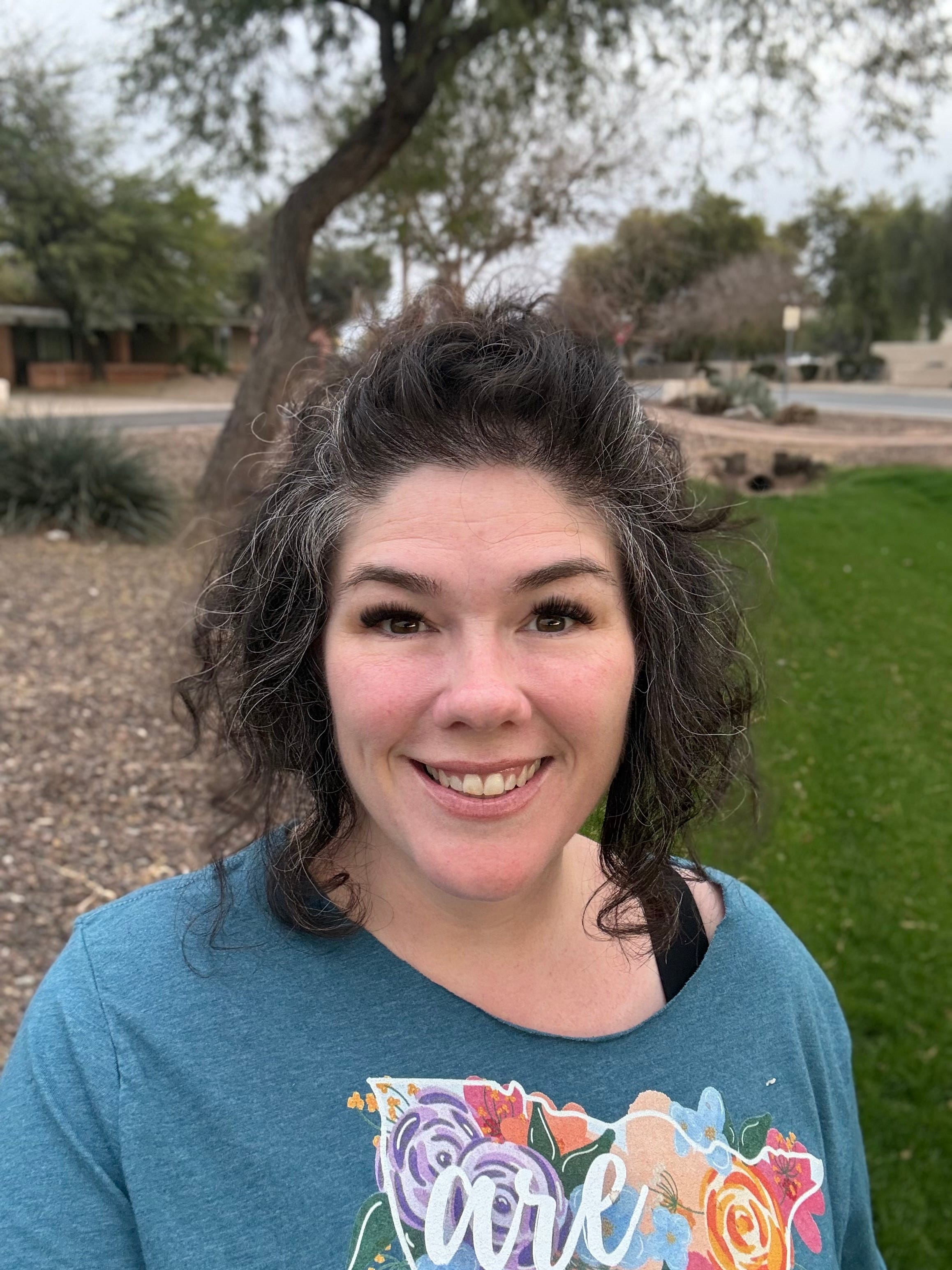
Brittney Walker
I am an ADHD coach and writer living in Arizona with my husband and a lively household including six sons, a daughter-in-law, and a grandson. I spent many years trying to be reverent, organized, and less distracting, and now I write about executive function, faith, deconstruction, and rebuilding identity with a different kind of brain. My work explores neurodivergence, belonging, and the slow process of learning to trust yourself. You can find more of my writing at exmoadhdcoach.substack.com
Isn’t this a great space? We hope you’ll share ALSSI with anyone you think might benefit from our community. More voices, please!