


Merry Christmas to the ALSSI Community! We know that this time of year can be festive and wonderful, AND also complicated and painful. Many of us mourn Christmas lessons and traditions that used to serve us well, but now leave us feeling empty and distraught. The theme for this issue is, “Hope in the Reimagined.” We wanted to bring you some essays and poetry that show us we can find hope and meaning by looking at old things in new ways. Maybe along the way we can create new patterns and traditions that serve us better than the things we left behind.
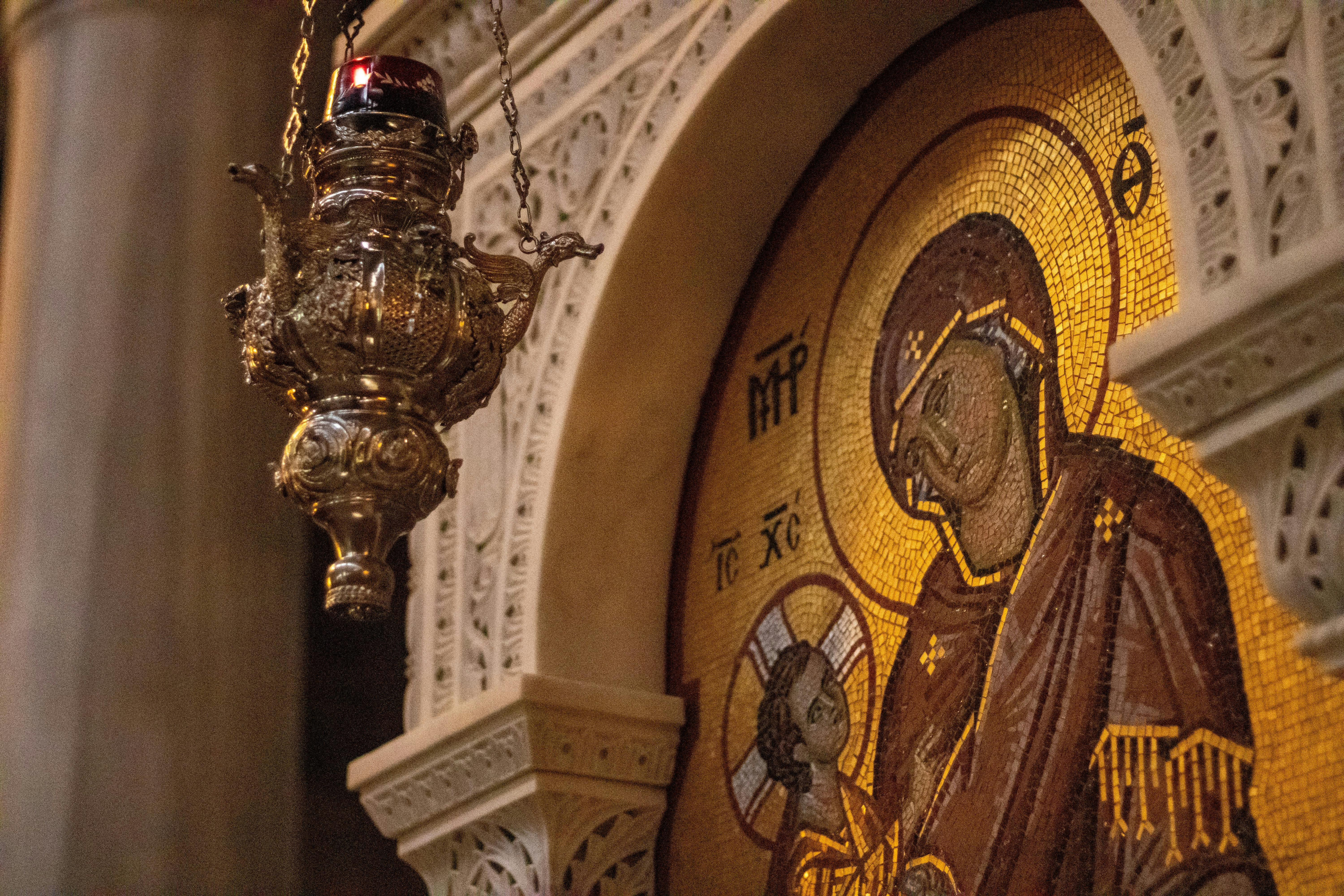
When I Began to Know Mary
by Francesca Georgi
This is a talk I wrote and gave in sacrament meeting on Christmas Eve, 2023. This was a difficult talk to write as I was in the most beginning and painful stages of my transitioning faith journey. Writing this talk was life changing and allowed me the opportunity to “liken the scriptures unto me,” and gave me permission to do my own midrash. Many women from my ward messaged or spoke to me after about how grateful they were that someone had spoken about Mary. It turns out, I’m not the only one very aware of the diminishment of the Mother of God, and hearing that was a relief. Even the smallest amount of solidarity can affect us deeply. I hope you feel some love and companionship as you read these words.
At Christmastime, we often focus primarily on the story in Luke 2,
the birth of Christ. It’s a wonderful story, and its familiarity is comforting. I love the yearly reminder of the story of the beginning of redemption. Its words are peaceful and passive, like watching beautiful scenery. But this year as Christmas has come closer, I’ve been unable to stop thinking of Mary. We know so much about her compared to many women in the Bible, and yet I feel like I know almost nothing. We often see her portrayal as a beautiful dark-haired young woman, very humble and willing to serve the Lord. We think of her as a vessel to bring the Son of God, and we predominantly focus on the story of how things happened, rather than the people who lived the story.
My last pregnancy was an incredibly difficult one, and I was so sick around Christmas last year. I was a little under the halfway point of my due date, and I just felt like I couldn’t do this. There were too many balls in the air, and something had to drop, but there were no plastic balls, only glass. There was no option but to go on. I was trying to settle in after our move, continue being a mom and wife, make Christmas happen, attempt to have a healthy pregnancy, and work for a good school semester in an area where I felt very out of place. Many times as I was lying on the couch, too sick to make it to bed, I found myself thinking, “Is this how Mary’s pregnancy felt?” I found myself praying, hoping that would somehow affect the past, that her pregnancy had not been this way. I thought of her so frequently that I began to imagine her spirit being alongside me when my pain became too intense to bear alone with no way to share the pain with someone else. I began to feel for Mary in a way that I never had before, as I suffered in a way that I never had before. The Christmas story became far more personal. I imagined myself in the situation as Mary, and I began to realize there was so much complexity beyond a few verses in scripture.
I realized Mary prepared somewhat to feel as the Savior did in the Atonement; by her long journey to Bethlehem, not being welcomed or helped by anyone, a long labor without the benefit of pain relief, a life changing event in a lowly place, the postpartum bleeding rendering her unclean according to Jewish law, the inability to really rest after her ordeal, the cluster feeding and needing to keep giving of herself after she’d given everything she could. She was ordained to be the Mother of the Beloved Son, but to prepare Him for what He needed to do in his mortal life, she needed to have an idea of what He would feel. She could never experience His pain the same way He did, but she could develop empathy alongside the fear that comes with being a mother. She had to learn to experience these emotions, so that she could understand how to let Jesus continue His tasks, instead of following a motherly instinct to protect Him.
She had to teach her child to want to save everyone, as God is no respecter of persons. He needed to understand the importance of literally every individual. Maybe part of the reason Christ reached out to those on the perimeter was because his own mother, the Mother of God, was an unwed mother. We talk so much about her faith, but we don’t mention her hardships beyond the actual birth. People tend to reach out to those who are different from them, or different from what society deems acceptable, when they’ve experienced some of the grief and ache that comes from ridicule and exclusion. Maybe the reason He went to be with people termed sinners was not just because of His mission, but also a learned empathy as the son of an unwed mother. He felt as many of those on the fringe felt because He was one of them. Similarly, we find the people with the greatest humility are the highest of the high and the lowest of the low. Somehow, He managed to fit both categories. We know He loved Mary so much, and as much as He would have struggled with how society treated Him knowing He was conceived outside of marriage, I believe part of it was that He didn’t want anyone to suffer as His mother did. He is the Beloved Son. She was His beloved mother. The gospel is a very personal experience turned into outward expression.
The entire story is about love, and looking beyond those that are easy for us to love.
Near the end of His mortal life, Jesus went to Mary where she was serving a wedding banquet. When there was no wine left, Jesus spoke with Mary. According to the JST version of John 2:4, Jesus said, “Woman, what wilt thou have me to do for thee? That will I do; for mine hour is not yet come.” When I think of that interaction in our modern day speech, I imagine that would have sounded something like Mary insisting He didn’t need to do anything, that she would figure it out or accept the embarrassment that would come with not having enough wine. I imagine Jesus would have pulled His mom aside and said, “Mom, you know I love you. I want to help you. I know you’re worried that I have things to do, but I wouldn’t offer to help right now if I couldn’t. Let me help you while I’m here with you.” The following verse, John 2:5, says, “His mother saith unto the servants, whatsoever he saith unto you, do it.” She accepted His help with incredible faith. She didn’t need to ask how this was going to work, she didn’t need Him to explain every step of the process, and she didn’t continue to shun help. She accepted His offering for peace. The Prince of Peace was sent for just that, to bring us peace. There is no matter too small for Him, just as there is no matter too great for Him. When He says His love is sufficient, it’s because it is designed to fit us perfectly, individually. Following this interaction in Cana of Galilee, Christ and His disciples went to Capernaum. Mary went with Him. I don’t really understand the significance of why it was recorded that she went with Him. There are so many reasons that could be. What I do know is that the feeling of peace it brings me to know that His mother was near in the final part of His mortal life, is palpable. The love she had for her Son probably helped the Messiah in His transformation to the Christ.
After Jesus died on the cross, we came full circle. His body was wrapped in linen, similar to His swaddling clothes. His body was anointed with spices, similar to the gifts of the Wise Men. Mary was still alone, still going through immense pain, still possibly questioning her role and her worthiness. Both times, Jesus lived. Both times, love was abundant and unceasing. Both times, the Savior was glorious. Mary was given her Son. He was her Prince of Peace, and He was called Wonderful.
We often think and talk about Christ as a step above us all, and rightfully so. But the story of Mary gives me hope. If Jesus could love and adore someone who experienced normal mortality, including mistakes, fear, sin, and sorrow, then He might love and adore me just as I love and adore Him. As our Counsellor and our Advocate with the Father, Christ is definitely on a pedestal higher than we are. But there was a reason He was born in a stable and died on a cross. His humility makes Him accessible to us, although sometimes it’s hard to imagine because of His perfection. The story and concept of Mary helped make the Savior more accessible to me, because I could find a new angle from which to learn. As Mary loved Jesus in a more personal way than only as her Savior, we are invited to love Him so personally. He genuinely wants us to come to Him, He wants to be our Savior and Redeemer; but He also wants us to have the type of relationship He did with Mary. More than just knowing our name and us knowing His, He wants our stories to mesh and become more beautiful as they entwine. He doesn’t want us on the perimeter alone, He’s already sitting with us if only we will see it. He was born on that lonely night so we never have to be lonely. He has offered His help, just as He did with Mary and the wine. He’s telling us that of course He has time for us. He’s asking us to go with Him, as Mary went to Capernaum. He walked a lonely path so that we will never have to, and it all started with a sweet baby and a lonely, tired mother.
The entire story is about love, and looking beyond those that are easy for us to love. We need to look to the perimeters and the lonely outskirts for those that feel they don’t belong. Maybe sometimes even we as individuals don’t think they belong. But I remind myself, and all of you, that the Savior was one of those who we as a society wouldn’t have thought belonged. We never know the influence of those we would dismiss. I’m so grateful for Mary showing me a new way to see this story, and reminding me that my capacity for love is unlimited, and it’s my divine instruction to love everyone, just as I strive to love Christ.
This Christmas, as we remember Christ, I invite you to think of the love He has for you individually, even knowing about the things you think would move you to the perimeter. He loves you anyway. What better way to celebrate the birth of our Savior than spreading love with no respect of persons.


Onward
by Lisa Fluckiger
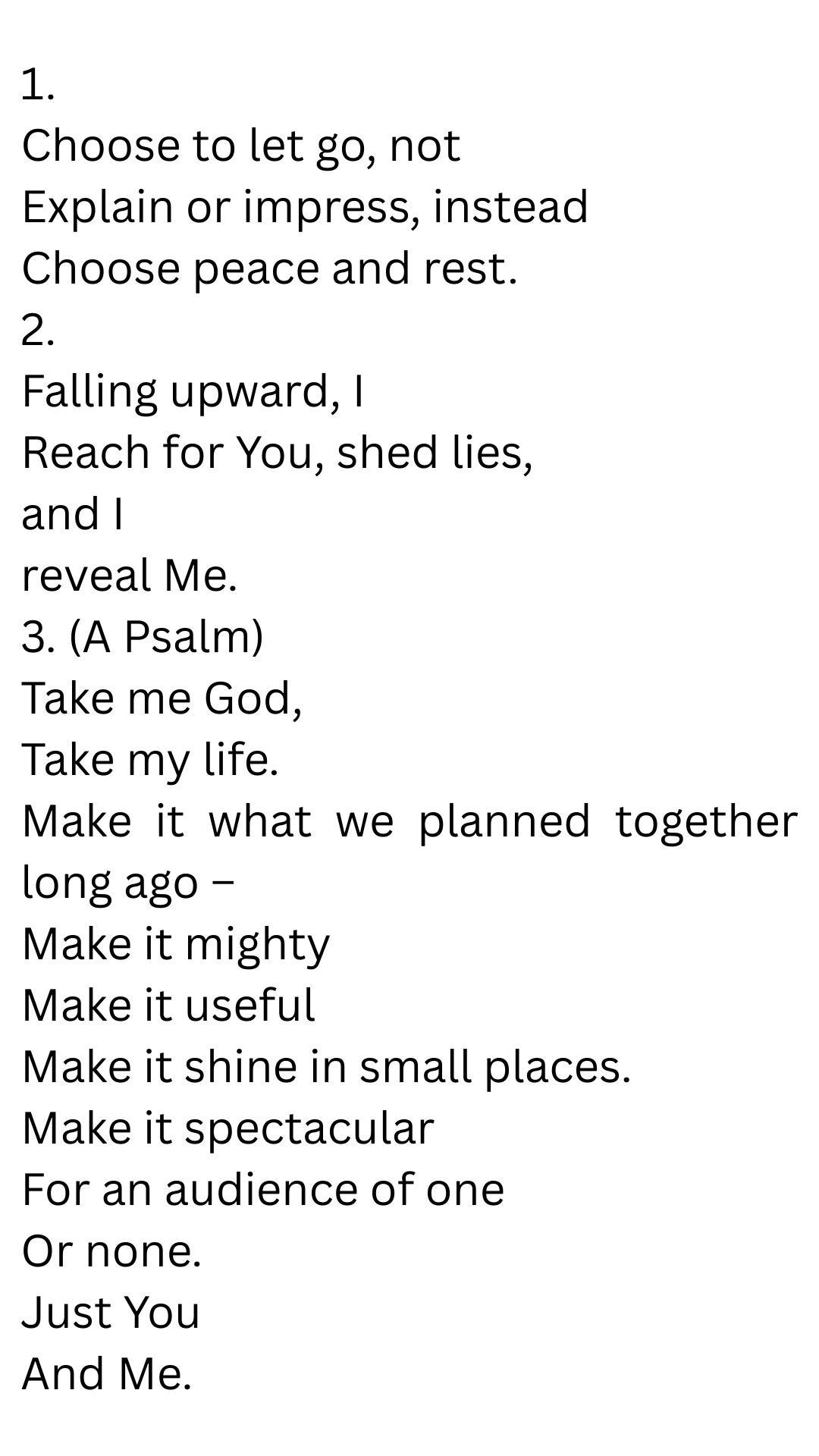
Note: This poem was written in 2023 and is a snapshot of my faith that summer. Coming back to it this week, I had to change a word or two. Beliefs are like that—hard to pin down. Thanks to Richard Rohr whose teachings in “Falling Upward” have normalized and encouraged the journey of faith.


When God Delights in the Chastity of Women
by Jessie Santa Maria Whittaker
I read Jacob chapter 2 in preparation for the lessons on
plural marriage. And I think it might be one of my favorite chapters in all of scripture. It’s raw and emotional and deeply human. Jacob doesn’t want to give this sermon. In fact, he says it “grieveth” him to speak so boldly. But he does it anyway because love sometimes means saying hard things.
The chapter begins with Jacob calling out pride. Which includes the Nephites’ obsession with wealth, appearance, and hierarchy. They had started to believe that prosperity made them righteous. That being better off made them better than. Jacob warns them that this mindset is corroding their souls.
When I was a kid, my family used to read passages like this during scripture study. And the focus always landed elsewhere. Pride got redefined as anything that drew attention: piercings, “worldly” hairstyles, bright clothing, or self-expression of any kind. I learned that humility meant blending in: being small, modest, deferential. That faithfulness equaled disappearing.
And maybe because of that, I also internalized something deeper and more dangerous. It was my job to prevent harm from happening to me. If a man looked at me wrong or crossed a line then I had failed at being modest enough, humble enough, safe enough…
The responsibility for other people’s choices, and for my own protection, landed squarely on my shoulders.
Reading Jacob 2 as a teenager only confirmed what I’d already absorbed. “For I, the Lord, delight in the chastity of women,” meant that God’s love depended on my ability to keep others pure. That holiness was a fragile thing. It was easily lost and it was my duty to guard it at all costs.
Reading this chapter now, as an adult and as a social worker, I see something entirely different.
Jacob isn’t chastising women; he’s defending them. He’s speaking to men who have justified exploitation and harm under the guise of divine approval. He calls them to accountability for “breaking the hearts of tender wives” and “losing the confidence of their children.” He’s naming not just individual sin, but systemic harm, the misuse of spiritual power that leaves women and children in emotional ruins.
This is the part of scripture that resonates most with my values as a social worker. Our code of ethics begins with the belief in the inherent dignity and worth of every person. It calls us to challenge injustice, to protect the vulnerable, and to hold power accountable. Jacob is doing that. And he does it courageously. He’s centering the voices of the wounded and insisting that their suffering matters.
So when I read that God “delights in the chastity of women,” I don’t hear a demand for purity. I hear a declaration of dignity. I hear a God—both Father and Mother—saying, “I delight in your wholeness. I delight when you are safe, when your body and spirit are honored, when your relationships are mutual and kind.”
That interpretation feels even more powerful in contrast to the Come, Follow Me reading of Doctrine and Covenants 132, a section that has long been painful for me and countless others. It’s the one used to justify polygamy as “God’s higher law.” [Insert barfing emoji here]…
Chastity, in its truest form, isn’t about repression at all. It’s about reverence.
But I can’t see it that way. I don’t believe a higher law could ever justify a practice that causes so much suffering, silences women, and fractures families. Jacob 2 feels like a direct rebuttal to that idea. A reminder that when religion excuses harm, it ceases to reflect the divine.
If there is a higher law, I believe it is love expressed through justice.
If there is a divine pattern, I believe it is equality, compassion, and mutual respect.
And if there is a God who delights, I believe They delight in the healing of what patriarchy has broken.
As I read Jacob’s words, I can’t help but see him as an early advocate for trauma-informed ministry. He is someone who understands the ripple effects of betrayal and exploitation. He doesn’t shame the wounded. He mourns with them. He names the grief and calls the community to repair.
And as someone who has struggled with sex for a variety of reasons (be it shame, condition, pain, fear, etc.) I find something deeply liberating in reimagining chastity as sexual integrity.
For so long, I believed that taking control of my own sexual experiences was a sin. That pleasure, agency, and exploration somehow contradicted holiness. But now I wonder if the opposite might be true.
Maybe the Law of Chastity is more about self-mastery. It’s about respect for one’s own body and others’ bodies. About knowing your body, your boundaries, your desires. About saying yes and no from a place of awareness rather than fear. About embracing the divine drive to create, connect, and experience joy. About integrating sexuality into one’s overall being in a healthy and moral way.
Chastity, in its truest form, isn’t about repression at all. It’s about reverence. For yourself. For your partner. For the life force within you. It’s about being the ultimate authority on what feels safe, sacred, and right for you.
I think this is what it means for God to delight in chastity. Not delighting in our restraint, but in our integrity. In our wholeness. In our courage to reclaim what has been taken, distorted, and hidden in shame.
The more I study Jacob 2, the more I see that the heart of the message isn’t about restriction. It’s about repair and remembering that holiness and humanity were never meant to be opposites. They were meant to hold hands.
God delights in dignity.
God delights in truth spoken in love.
God delights when we choose integrity over image, compassion over compliance, and healing over hierarchy.
That’s how I want to obey the Law of Chastity. Living in the right relationship with myself, with others, and with the Divine.


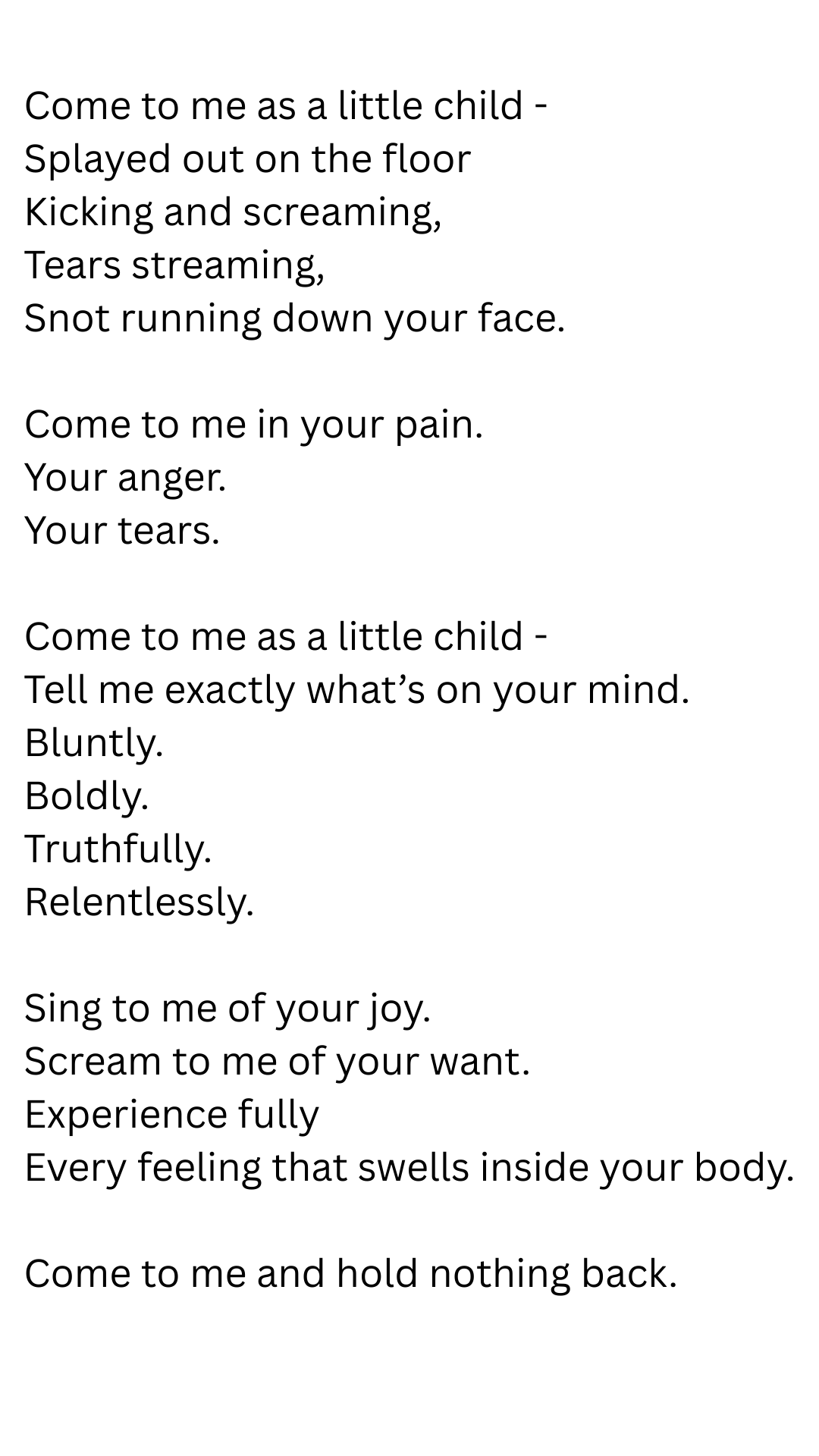
Come to Me
by Eliza Dosch

Contributors:
Francesca Georgi
Francesca is a wife and a mom of three daughters. She lives in Utah County and will receive a bachelors degree in Spring 2026. Francesca is also the author of Unlocked from The Exponent II winter edition of 2025.

Lisa Fluckiger
Lisa is a second year grad student in Chadron State College’s Clinical Mental Health Counseling MAE program. Her most recent work has been providing SEL education and support for middle school students. Long ago at BYU, Lisa earned a BA degree in chemistry and then a master’s degree in Curriculum and Instruction, with an emphasis in the inclusive classroom. Her family owns a small artisan bakery in the small town where they live, and it is a place where her daughter, Eleanor, can have meaningful work and continue to participate in the community. Totally her husband’s dream, and she is all for it! In addition to studying mental health, Lisa is loving life beyond church, running with her dogs, yoga, and writing. Also Netflix.

Jessie Santa Maria Whittaker
Therapist, writer, professional meaning-maker, wife, and momma. Jessie sits with big feelings, sacred questions, and nervous systems that have had a rough day—or life. She is a lover of Christmas magic, messy faith, honest stories, and the brave work of becoming fully human.

Eliza Dosch
Eliza is a non traditional student finishing a bachelors degree in Music Education. She is a single mom of 2, and has been navigating her faith journey for about 5 years.
Isn’t this a great space? We hope you’ll share ALSSI with anyone you think might benefit from our community. More voices, please!
I loved hearing all your voices this month! Thank you for sharing your raw feelings and thoughts ❤️
Oh this is all so good! Thanks for the messages that will resound with me for the holidays.