


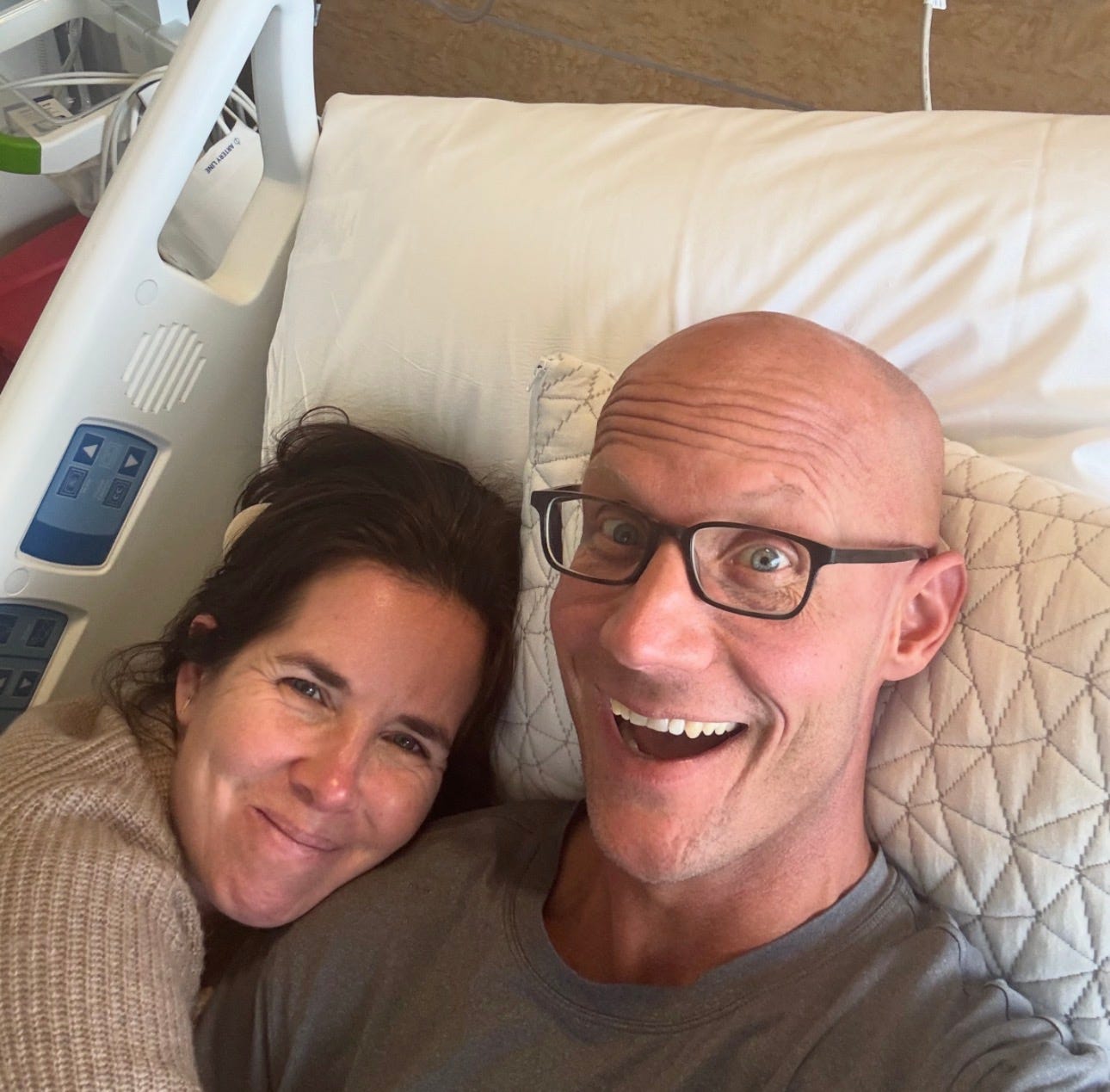
My Journey With Grief
by Emily Richards
It’s hard to know where to start. If I’m being honest,
my faith has been unraveling for years, I just wasn’t paying attention. We were busy with raising three boys, moving abroad, and getting my husband to a point in his career when we could finally slow down a little and reap the benefits of sticking with an intense career path. That point finally came almost two years ago when he became a partner at one of the world’s largest accounting firms. We were relieved to finally reach this stage in our lives, to get back to traveling again, and to feel like we “made it.” But something was gnawing at me. I was unsettled and chalked it up to perimenopause anxiety. Then it happened. My husband was diagnosed with Stage IV colorectal cancer at the age of 41.
My world fell apart. It felt like everything had been taken from us without our consent and certainly without any reason. We had worked hard our whole lives, gone to church, paid tithing, served in our callings, gone to the temple and the list goes on. There was no history of cancer, he’s the youngest in his family and in great physical shape. The idea that we chose this trial in the pre-mortal world didn’t make any sense. I don’t think my 41-year-old husband chose before he came to this earth to get cancer and leave three teenage boys with one of them having significant disabilities. Can you even imagine such a thing? Or that God gave us this trial like he’s up in heaven hand picking who gets what and looked at us and said, “You know what, you’re strong people—I bet you can handle this one.”
What has happened in the last 16 months since his diagnosis has been a complete transformation. I shouldn’t say “complete” because I know I’ll continue to evolve and grow through this experience. But I’m not the same person I was before his diagnosis and I never will be. And when he dies and leaves this world, I know I’ll continue to change and have transformations. That’s a whole other side to this grief, that my person won’t get to see the woman I’m going to become.
I know I’m not the first woman to lose her husband in her 40’s, but can I just say it’s different for those of us who are on the younger side and I don’t think anyone would argue with that. It’s called “widow math,” which is essentially the longer I can keep him here (as if I have any control over this), the less time I have to do this life without him. Either way, I’m looking at the next 30-40 years without my person and it’s an unbearable thought. We met at BYU when we were 18, we grew up together and built a family. Our youngest son was born with Down syndrome 12 years ago, which was another transformative experience and if I’m being honest, I thought that was the BIG event of our lives. Little did we know.
This experience has clarified so many things for me. Spaces I had occupied before became impossible. It felt like everything and everyone was out to get me from seeing a middle-aged man playing pickleball (something my husband and I love to do together), watching older people (including our parents) go about their lives with little health issues, to seeing other families on Instagram traveling, or simply being asked by a grocery store clerk how my day was going.
Church was the ultimate test. I can do small talk for about five minutes and then it’s time to go. But seeing the throngs of people every Sunday chatting and laughing in between meetings and after reminds me that we are in a completely different world than everyone else. I wish I could be light again, I wish I didn’t know how quickly life can turn upside down. They all seem to be living in a world where that can happen (because we are the proof of that) but not to them.
One of the things I’ve felt so strongly in our home since my husband’s diagnosis is the love of the Divine. I know He sees me, heaven is crying with us, and is giving our family all the support they can right now.
The mantra I had to learn at the beginning when all I wanted to do was scream in the middle of sacrament meeting was “not everyone gets a front row seat to my grief.” Most of the time I have to completely disassociate at church, especially when topics like “hope” and “trials” and “miracles” come up. We talk a good game in the church, but until you’re faced with something completely out of your control, all of your former lines of thinking no longer apply. All bets are off as they like to say.
I’m not exactly sure how to wrap this up in a nice bow that’s easily acceptable to the masses. I’m very aware that my story can spark a lot of fear and anxiety in people, which makes me somewhat of an outcast. Luckily, I have some incredible women in my life who will see me through this—and are. Thank God for these women.
I’ve had to rethink everything these past 16 months. From logistics like where will I live and how will I provide for my son and myself after supporting my husband in a big career for the past 20 years, to what will I do about church after he’s gone. Church is hard now and I can only assume it will get harder. We also have a very specific situation with our youngest—he tolerates church and the only way we can get him through the first hour is by giving him goldfish and letting him watch Youtube. He’s non-speaking and has significant hearing loss so he gets nothing out of being there. He’s also overwhelmed by crowds and closed doors (aka the chapel). I can’t wrestle an 80 pound child who’s asking for his dad each Sunday just so I can be sitting in the pews. I don’t think anyone would argue with this, or certainly not with me.
Another scenario I’ll be facing is that I will no longer have a priesthood holder in my home when my husband dies and my two older boys leave home in the next three years. I was taught to marry a worthy priesthood holder (check) and yes, I still have the letter to my future husband I wrote as a Beehive. How will this work?
All of this brings me to THE question, what does it mean to “live the Gospel” when our traditional ways of doing so are no longer possible or cause pain? I have to believe God understands my situation. One of the things I’ve felt so strongly in our home since my husband’s diagnosis is the love of the Divine. I know He sees me, heaven is crying with us, and is giving our family all the support they can right now. I can feel I’m being prepared for a life without my partner. So many miracles have happened and will continue to happen, just not the one we want the most. And no, He’s not taking attendance and He certainly isn’t going to withhold His love and protection from my home because a man no longer lives in it. Someday, I’ll be a widow raising a son with serious disabilities, and who do we think God is more likely to give His power to, me or a man?
Someday, my time will finally come and let me just say that I have no fear of death now. It will be a happy day when it’s my turn. I have nothing to fear in death. I’ll finally be back with my person. And when that day comes I imagine my Heavenly parents will pull me into their arms (after my husband of course, he gets first dibs) and tell me how sorry they are that this happened.
Note from the author: I wrote this a couple of months ago when I thought we still had at least a year left with my husband. Just five weeks ago, his cancer took a turn and we are now on hospice and in his final days. Everything I wrote then is still true, but there have definitely been some new struggles and feelings that have come up now that we are at the end. When my brain can put sentences together someday, I’ll write again.

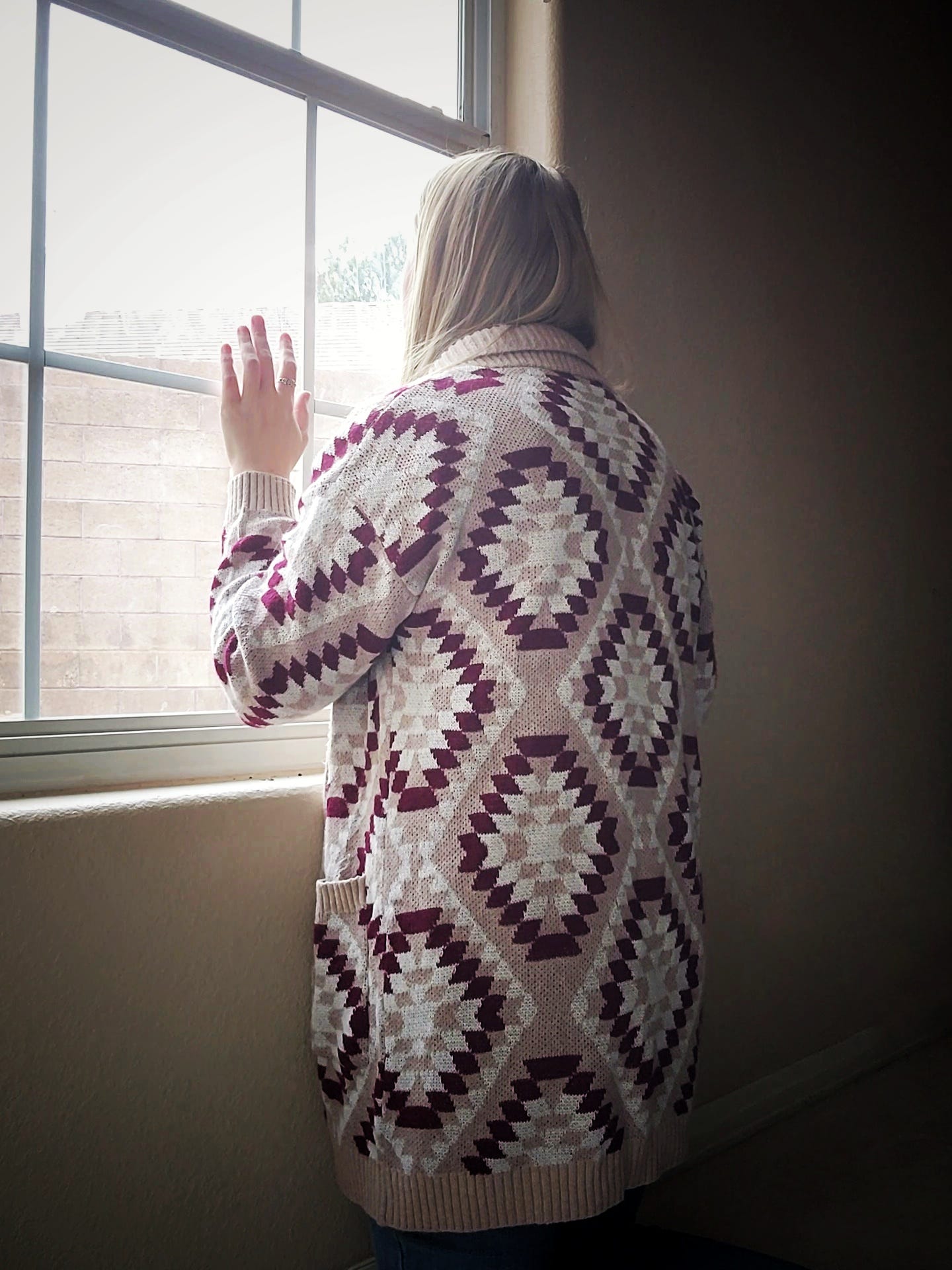
Kneeling
By Nicole Slater


Temple Recommend Questions and My Heart
by Ellen Hawkins
When I first went to the temple I was 21 years old.
I was WAY too young to get married and WAY too young to make temple covenants. I was just doing what I thought was “right” even though it was not right for me then, and sadly isn’t now. Although some of these rituals have changed recently, it was already too late for me. It felt unsettling covenanting to obey my husband, veiling my face, changing all those robes multiple times, and forgetting the answers at the veil. I was always mildly scolded by the gray-haired, well-meaning sisters who wanted me to be fully ready to enter God’s presence. At the beginning of the ceremony, when asked if I wanted to withdraw rather than take on sacred covenants, I didn’t know if I did! I didn’t know what they were until after the ceremony. I was not witness couple or prayer circle material. It seemed I was the last person getting robed or disrobed, and I would panic that I wasn’t more adept at tying bows under pressure.
My ADHD was undiagnosed at the time and sitting through a two hour, repetitive ceremony was excruciating. I wondered why I felt little joy. One was supposed to feel joy at the temple according to every Relief Society lesson given since 1842. No one talked about not feeling joy. Was it something I was doing or not doing that prevented me from feeling the spirit that I was promised? The celestial room was a lovely, peaceful place and definitely a conduit to God’s love. But it was not transformative in the way I expected or hoped. Where was Jesus? I wanted to learn about Jesus—not about Peter, James, and John, Adam and Eve, or Satan. Why were they front and center?
But I really tried and went occasionally as much as my mental health would allow. I found some satisfaction in participating in sealings and initiatories. I enjoyed seeing the names and ages of the sisters I was proxy for. I wondered if they knew what was happening from the other side, and did they want to have temple ordinances performed for them? I attended when two of my children went on missions. I attended when my son got married. I answered the temple recommend questions half-heartedly in order to be there for these special occasions. I am prone to feeling intense guilt about everything, and so feeling unworthy (whether I was or not) to go to the temple weighed heavily on me. I knew I was disappointing my husband. I was certain Jesus was disappointed in me. I now realize that he wasn’t then and isn’t now, and this knowledge has lessened some of the pain. It’s sad to think how many years I wasted thinking that Jesus’ love for me was dependent on my relationship with the temple.
When or if my daughters decide to get sealed in the temple, I have been wondering about my course of action. Will I choose to sit in the waiting room? What will more “righteous” family members think when the mother of the bride is waiting with others who chose not to sit through a worthiness interview? Who chose not to answer invasive questions that don’t measure our desire to follow Christ and the good things we’re trying to do?
These questions require us to look higher and broader. They require us to think about all of God’s children, the goodness to be found in all religions, and the potential to find Christ through service. Above all, they are Christ-based.
The temple recommend questions do not reflect a person’s heart. They don’t reflect my heart. Since they lack depth and insight into my commitment to follow Jesus, I decided to rewrite them in a way that just might make me want to attend the temple again. If they were written this way, I could reflect on whether I was a true disciple of Christ, and not just adept at answering questions about sex, underwear, coffee, and money.
I know that we will never see these revised questions in the handbook, but I hope that Jesus will be in charge of temple “worthiness” someday instead of church leaders. These questions do not ask about exact obedience to LDS prophets or their infallibility. They don’t make LDS prophets the only ones who can speak for God. They don’t ask us to avow that the Church of Jesus Christ of Latter-day Saints has more truth than any other religion that provides comfort and joy to God’s children. These questions require us to look higher and broader. They require us to think about all of God’s children, the goodness to be found in all religions, and the potential to find Christ through service. Above all, they are Christ-based.
Here is how I would rewrite the questions:
Do you believe in God the Eternal Father, Heavenly Mother, in their Son Jesus Christ, and in the Holy Ghost?
Do you believe that Christ is our brother, Savior, and friend, and that through His grace and atonement we can be forgiven of wrongdoing?
Do you believe that The Church of Jesus Christ of Latter-day Saints contains truth, can strengthen family relationships, and provide support and community for members and non-members?
Do you obey Jesus’ commandment to love God and your neighbor?
Do you strive to provide service to those in need in your family, church, employment, and neighborhood?
Are you willing to financially assist people, worthy organizations, and the church when possible?
Do you accept all people regardless of sexual orientation, race, ethnicity, social status, and religion as children of God? Do you believe that they can be worthy to participate in all church activities and attend the temple?
Do you believe that men and women are created equally?
Are you faithful to your spouse?
Are you a faithful partner in raising your children?
Do you strive to take care of your body by eating healthy foods, exercise, getting adequate sleep, and avoiding harmful substances?
Do you seek to build a relationship with God and Jesus Christ through church attendance and creating a loving and supportive community with other members and friends?
Do you seek answers to your questions through scripture and other enlightening books or music or nature?
I can only hope. Until then, there is still a lot of work required to be a disciple of Christ despite these revised questions. Maybe even more.


The Nervous System and The Body Of Christ
by Sarah Maxwell Neipp
In May 2004 I returned from my first semester away
for college and went for a bike ride as a reunion with a best friend along the foothills of the Salt Lake valley. I was grateful my dear friend let me borrow a bike since I did not have one of my own. A short while into our bike ride, my upper body began feeling quite sore—I was not an experienced biker and assumed I was paying the price in muscle fatigue. The soreness continued to intensify even after our ride, but I thought nothing of it. I was elated when later that evening the soreness and aches suddenly disappeared. We had met up with more friends to reunite and reconnect after months apart.
We decided to get in cars to gather at a different home, moving in the herd-like fashion from high school. I walked over to my friend’s car and when I went to open the door, my hand simply would not do it. I chuckled at my malfunction and attempted again, but was still unable to open the door—I could not even grip the handle between my fingers. We all had a good laugh—I think my friends imagined I was clowning around to entertain. Eventually a friend opened the door, and I got in. I went home shortly after to quiet since my family had gone to sleep—they did not hear me awkwardly trying to change into pajamas to go to bed with hands that were incapable of gripping anything. I thought that sleep would fix everything—I would wake up with normal capacity and an entertaining story to tell in the morning.
I was wrong. I woke with numbness in both of my hands, some of my arms, and a new band of numbness around my stomach. I told my parents, rested most of the day (it was Sunday after all), and Monday morning we called my physician.
That summer I was diagnosed at age 19 with Multiple Sclerosis. I had MRIs, CAT scans, cortizone injections, and began betainterfuron treatments. I gradually gained most of the feeling back in my hands and stomach, but the strength in my hands—particularly my thumbs—is to this day ever-so-slightly less than it was before this incident.
The nervous system is remarkable! Its complexities and intricacies continue to marvel me as I learn more about its functions in bodies. The nervous system is intended to operate as a bi-directional feedback loop—motor signals go out from the brain to different areas of the body and sensory input sends data back to the brain. The sensory input provides information for the brain about touch, pressure, pain, temperature, and positioning of the body through space. This allows the brain to process the information and modify future messaging. Sometimes this feedback loop is interrupted in both directions, as it was when my hands, arms, and stomach went numb. Alternatively, sensory neuropathy occurs when the brain can send motor commands to areas of the body but that area of the body cannot communicate back sensory information—ultimately injuries can occur, balance and coordination often suffer, and generally the individual will begin to over-compensate in a certain area (often visually) because they cannot rely on sensory input from their body. My father, who has neuropathy in his feet, broke his toe and was unaware for months—ultimately he needed reconstructive surgery on three toes to repair the damage from walking on his injured toe for more than a year.
If our desire is to be one—to value each member—then we must improve both our systems and willingness to hear feedback from each part of the body.
The hierarchical structure of the church is one of a disrupted feedback loop. One direction of information flows normally—from the “brain” or leadership of the church to the rest of the body—but the return signal is lost. In addition to this top-down-only flow of information, at a more local level we hear all too often of a similar failure of communication where the true feelings of individuals are reprimanded, shut down, or withheld for fear of the many consequences of pointing out flaws in a system we declare to be inspired, but that we also infer is without a need of adjustment. This disconnection is regularly evident as individuals who defend the church talk past those who point out the pressure, discomfort, and pain created by the church in lives of other members.
When we dismiss the experiences of individuals, we are telling another area (person) of the body of Christ, “I have no need of your sensory data.” We are rejecting Paul’s injunction that, “If one member suffers, all suffer together with it.” (1 Cor. 12:26) Many individuals who have left the church have done so because their cries of discomfort, pain, and position are ultimately unheard, unwelcome, or shut down, and the data they are trying to share does not make it back up into the brain to synthesize information from the external world into the commands sent to the body.
If our desire is to be one—to value each member—then we must improve both our systems and willingness to hear feedback from each part of the body. If the general leaders send unread letters and emails back to local leaders, then we are preventing the sensory feedback of the members from reaching the brain. The pain and damage happening to the members will continue right in front of us when it could be addressed and prevented in the future if we would facilitate a bi-directional feedback loop between leaders and members. When we are selective about which members of the body of Christ we listen to, we create a veritable echo chamber of validation. Unless we prioritize listening to the diversity of experiences throughout the body of Christ, we lose awareness of and connection to data that should be so valuable to us in our efforts to follow Christ’s injunction to “be one” so that we can be his.

Say More: At Last She Writes It is thrilled to introduce a new series called, “Faith in Focus: ADHD and the Mormon Mind,” by Brittney Walker.
This series explores how ADHD shapes the faith experience for women raised in the Church of Jesus Christ of Latter-day Saints, from the early moralization of difference, to the exhaustion of trying to measure up, to the courage of rebuilding identity after leaving. Each essay stands alone but together they trace the arc from misunderstanding to self-understanding.
The goal isn’t to critique the church, but to name what so many women feel but can’t articulate: that our struggles aren’t spiritual defects. They are neurological differences met with impossible expectations.
The following essay, “The Girl Who Talked Too Much,” is the first of the series. The next of the installments will be included each month.

The Girl Who Talked Too Much
by Brittney Walker
I don’t remember squirming in Primary so much.
But I remember talking.
And being sent to the hall. Again and again.
It wasn’t rebellion. I just always had something to say: an idea, a joke, a connection, a question. It popped into my brain and was out of my mouth before I could stop it. I was the first to memorize every scripture, the first to raise my hand, the first to volunteer. I wanted so badly to be good. But somehow, good was always quieter than me.
I was told I talked too much.
That I interrupted.
That I should learn to “reverence my voice.”
No one said I might have a brain that moves faster than my mouth can keep up.
No one said my excitement wasn’t sin.
Reverence and other impossible virtues
In the church, being “reverent” isn’t just about noise. It’s an outward manifestation of your relationship to the divine. The “good girls” are soft-spoken and graceful. They fold their arms and cross their legs, sing in the right key, and sit through sacrament meeting like angels carved from stone.
I tried to be one of them.
I memorized all the Articles of Faith before anyone else.
I bore my testimony as soon as I could toddle to the pulpit (and to anyone who would listen).
I smiled so hard my cheeks hurt.
But reverence never came naturally. My voice was too loud, my laugh too big, my feelings too close to the surface. I wasn’t defiant. I was enthusiastic. I wanted to participate in everything, and I didn’t understand why that made grown-ups sigh.
What I learned early was that being “too much” was just as bad as being “not enough.”
The unseen kind of wrong
ADHD in girls doesn’t usually look like the Primary boy balancing a chair on his head. It looks like a girl who blurts answers, over-explains, talks fast, laughs loud, volunteers for everything. And still gets labeled “distracting.”
It’s the invisible kind of wrong. Earnest, high-energy, rule-following, and somehow still failing.
We weren’t the kids skipping Seminary; we were the ones teaching the lesson when the teacher didn’t show. But our report cards came back with “bright girl, talks too much.” Church leaders praised our testimonies and then reminded us to tone it down.
You learn, after a while, that the best way to please people is to shrink yourself.
Obedience as personality
ADHD girls are masters at overcompensating.
I became the kind of obedient that could win awards for it.
Color-coded scripture tabs, perfect Visiting Teaching records, Relief Society lessons that would bring a tear to your eye. My effort level was Olympic. My nervous system was fried.
The church rewards that kind of over-functioning. Especially in women. We call it diligence. We call it faith. But it’s often the coping mechanism of someone trying to prove she isn’t defective.
When you have ADHD, chaos is always humming beneath the surface. So you build structure out of guilt and glitter. You keep saying yes to every calling, every committee, every meal train, hoping the doing will finally quiet the noise inside.
It never does.
The gospel of repentance
If obedience became my personality, repentance became my reflex.
The harder I tried to live up to every expectation, the more proof I found that I couldn’t. I lacked consistency. The kind of daily steadiness that was praised from every pulpit. Scripture study, morning and night prayer, timely preparation for callings or meetings. I meant to do them all, but my follow-through never matched my intentions.
And yet, I never forgot to repent.
Every skipped morning prayer, every missed journal entry, every talk prepared last-minute went on the invisible list of things to be sorry for. I carried a prayer in my heart … of apology. I was always confessing, always resolving, always promising that next time I’d be better.
What I didn’t know then was that inconsistency wasn’t a moral flaw. It was my ADHD showing up exactly as it does for everyone else, just in the language of faith. But back then, inconsistency felt like sin.
So while other girls were building testimonies, I was building a case against myself.
The burnout prophecy
By adulthood, I was exactly who the system had trained me to be: responsible, spiritual, dependable—and exhausted.
Every late bill, every missed appointment, every Sunday morning meltdown felt like moral failure. I’d think, If I just tried harder, prayed harder, planned better…
People would say, “You’re amazing! I don’t know how you do it all.”
And I’d smile and think, Me neither. Because I can’t.
Burnout, for me, wasn’t a slow fade. It was the moment my mind said, No more pretending. The checklists that once gave me safety now felt like cages. The structure that once kept me safe now made me suffocate.
That’s the problem with trying to earn your peace. You can’t keep up forever.
When the name finally fits
Getting diagnosed with ADHD as an adult was like reading my patriarchal blessing and realizing it had been misfiled under someone else’s name all along.
Suddenly, everything made sense.
The noise in my head, the bursts of energy, the forgotten forms, the half-finished projects, the guilt. The GUILT. The big emotions. All of it.
It wasn’t a lack of faith or discipline.
It was a different kind of brain, living inside a system that didn’t know what to do with difference.
That realization didn’t make me bitter; it made me merciful.
Merciful toward that little girl in the hall.
Merciful toward the woman who kept saying yes.
Merciful toward everyone who tried to make sense of me with the language they had.
What I wish she knew
If I could whisper through time to that chatty Primary kid, I’d tell her:
You weren’t bad.
You weren’t unruly.
You were curious, alive, and trying to connect in a place that prized quiet over authenticity.
You memorized every scripture because your brain loves stimulation.
You volunteered because you craved connection.
You talked because silence felt like being erased.
None of that was wrong.
Your voice was never the problem. It was proof you were here, thinking, feeling, learning, trying.
The church told you to be still and know God.
But maybe God was never in the stillness for you.
Maybe God was in the conversation.
The girl who talked too much was never broken.
She was just early to the truth.

Contributors:
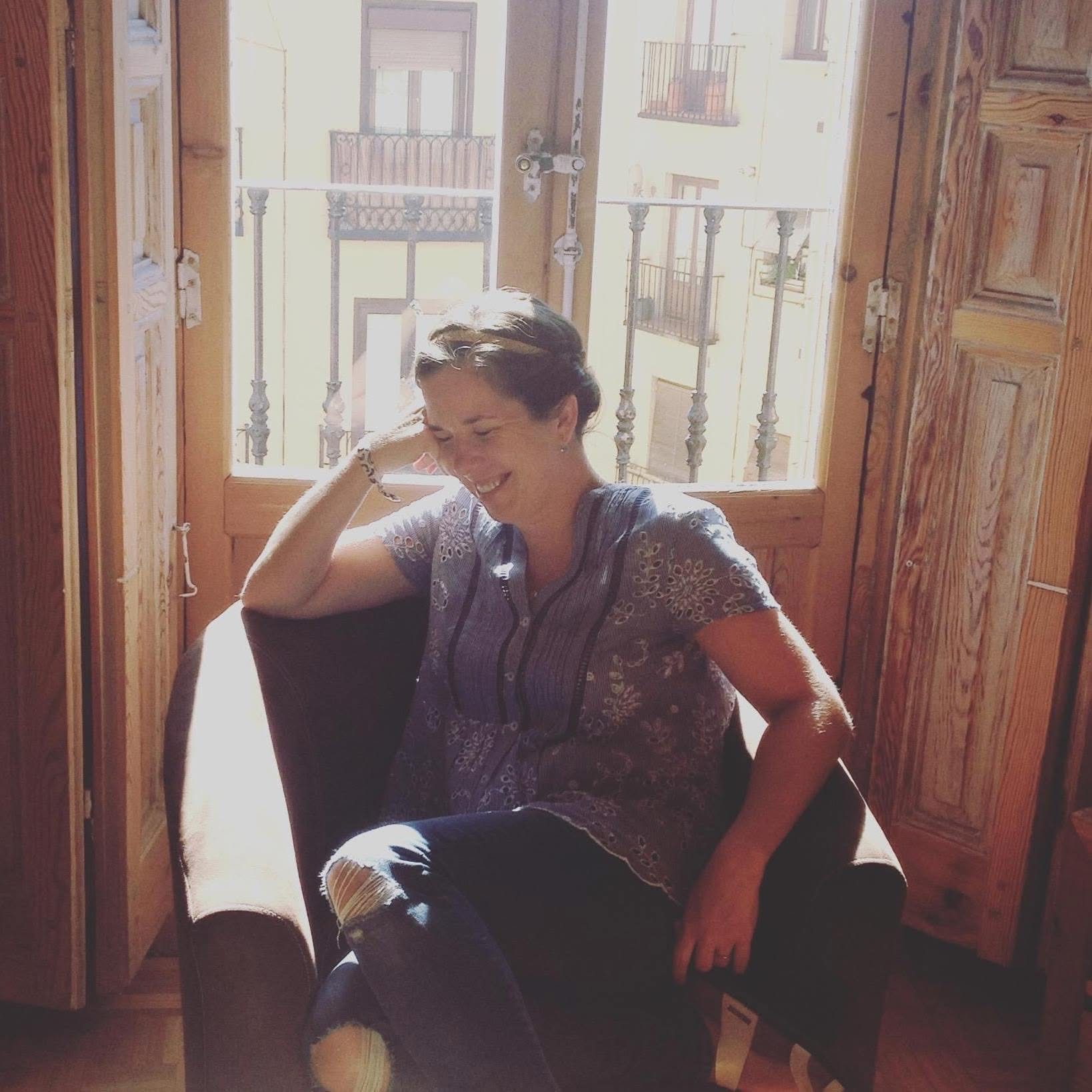
Emily Richards
At the moment I am a heartbroken caretaker. My husband Todd is in the final weeks of his life after 20 months of battling cancer. I am also a mom to three boys ages 17, 15, and 12. Our youngest son, Ben, has Down syndrome so I also consider myself an advocate for not only my son, but all those with disabilities. I spent 15 years in the PR field and plan to take those skills I developed to build a new life for Ben and myself by starting a day center for adults with disabilities near the ocean (Ben’s favorite place).

Nicole Slater
I am a creator, a wife, and a mother of three who lives in New Mexico. I have a Bachelor’s Degree in Communications and freelance occasionally in Graphic Design and Photography. My free time is almost always spent reading.
Ellen Hawkins
I am a junior high reading and writing teacher and spend much of my day repeating instructions and answering questions I've already answered. Sometimes teaching happens. I am amused by 12-13 year old students, and I love watching all the real life that is being navigated in the halls and classrooms of the public schools. There is no better place to learn about what it means to be human in a complicated, stressful world. Reading is my true joy along with fires, cozy clothes, lunch with friends, Sunday night dinners, movies, walks, flowers, and Pilates. I am trying to phase into girl dinners, writing more, and meaningful conversations with people I love. I have four grown children, and two granddaughters who live way too far away. I try to visit them as much as possible. My husband and I live in Utah.
Sarah Maxwell Neipp
I grew up in Salt Lake City and have lived in Virginia, California, and Washington D.C. (where I served an LDS mission). I received two degrees in vocal performance and currently teach and perform locally. I love my husband and two children along with our dog and two cats. I’m an Enneagram type Nine.
Brittney Walker
I am an ADHD coach and writer living in Arizona with my husband and a lively household including six sons, a daughter-in-law, and a grandson. I spent many years trying to be reverent, organized, and less distracting, and now I write about executive function, faith, deconstruction, and rebuilding identity with a different kind of brain. My work explores neurodivergence, belonging, and the slow process of learning to trust yourself. You can find more of my writing at exmoadhdcoach.substack.com
Your subscription makes the podcast possible! Together we’re building a community where you can say what you need to say: send us a voicemail, start a chat thread … or write a piece for a future Say More!
I’m so grateful to be part of this issue. The vulnerability in these essays is stunning. Emily’s piece especially has stayed with me all morning.
Brittney, I am excited about this series. This is good stuff!
Sarah, I just love your metaphor. I mean, I hate it because it doesn't need to be this way, but the comparison is dead on.